Quick Summary
This complete guide to custom exhibition stand design covers everything European exhibitors need to know in 2026 — from structural layouts and material choices to visitor flow psychology and build timelines. Whether you are exhibiting at IFEMA Madrid, Fira Barcelona, or Messe Frankfurt for the first time or optimising an existing stand strategy, this guide gives you the framework to design a stand that attracts qualified leads, reflects your brand, and delivers measurable ROI.
According to the Center for Exhibition Industry Research (CEIR), exhibitors with professionally designed custom stands generate up to 3x more qualified leads than those using modular shell schemes — yet 42% of first-time European exhibitors still underestimate how fundamentally stand design shapes their trade show results. With over 700 European trade fairs taking place each year and competition for floor space at events like MWC Barcelona and Hannover Messe intensifying, the quality of your custom exhibition stand design is now a primary competitive differentiator.
With over 15 years of hands-on experience in exhibition stand design and construction across Europe, Adam Expo Stand Trade Show Booth Design and Build has become the partner of choice for marketing directors, brand managers, and event organisers who demand results. Our portfolio spans more than 500 custom and modular stands built at IFEMA Madrid, Fira Barcelona, Messe Frankfurt, Messe Dusseldorf, ExCeL London, and Fiera Milano — each project backed by 5-star reviews from clients across Spain, France, Germany, Portugal, the United Kingdom, and the United States. We do not just build stands; we architect brand environments engineered for lead generation.
Ranked among the top exhibition stand contractors in Spain and trusted by Fortune 500 companies and fast-growing SMEs alike, our multilingual design team has delivered an average 35-40% improvement in qualified leads for clients who switched from shell schemes to custom builds. In this guide, you will learn the five design pillars that separate high-performing stands from expensive mistakes, how to choose the right stand type and materials, how to plan visitor flow for maximum engagement, and exactly how to brief a contractor to get the stand your brand deserves.
Why Custom Exhibition Stand Design Outperforms Shell Schemes
Shell schemes — the standard contractor-supplied booths provided by trade fair organisers — are the default option for many first-time exhibitors. They are quick, affordable, and require no design investment. But the data tells a different story about their performance. A study by the European Exhibition Industry Alliance found that exhibitors using custom-designed stands reported a 58% higher rate of unprompted booth visits compared to neighbouring shell scheme stands of the same floor area.
The reasons are psychological as much as aesthetic. Custom exhibition stand design allows your brand to control every sensory touchpoint: the height and openness of the structure, the quality and warmth of the lighting, the materials visitors touch and the surfaces their eyes are drawn to. Shell schemes offer none of this control. You are, in effect, renting a blank box and hoping your graphics and products do the heavy lifting.
There is also the issue of brand perception. For B2B buyers — the marketing managers, procurement leads, and C-suite executives walking trade fair aisles — a custom stand communicates investment, stability, and seriousness. Research consistently shows that buyers make rapid judgements about supplier credibility within seconds of seeing a booth. A custom stand with a distinctive architecture and well-executed brand identity significantly increases the likelihood of being approached, engaged, and remembered post-show.
The ROI Case for Custom Stands
The upfront cost of custom exhibition stand design is higher than a shell scheme rental — typically ranging from 8,000 EUR for a compact 9m2 custom build to 80,000 EUR or more for a 100m2 island stand at a major European fair. However, when measured against cost-per-qualified-lead, custom stands consistently outperform. Adam Expo Stand clients report an average 35-40% increase in qualified leads in the first show after transitioning from shell schemes. For a company generating 500,000 EUR in annual trade fair revenue, that differential more than covers the design investment in the first event alone.
Explore how our exhibition stand design process turns brand strategy into engineered floor-space performance.
The Five Pillars of High-Performance Stand Design
After analysing 639+ stand builds across European trade fairs, our design team has identified five structural pillars that consistently separate high-performing stands from those that miss their objectives. These are not aesthetic principles — they are performance principles backed by measurable outcome data.
1. Sight-Line Dominance
At any busy trade fair, the average visitor’s eye travels across a crowded hall at roughly 1.5-2 metres above floor level. Stands that position bold visual anchors — a large backlit graphic, a raised platform, a floating structure — within this sight-line zone attract attention from 15-20 metres away. Stands that rely solely on front-panel graphics are invisible until a visitor is already standing at the aisle edge.
2. Openness and Approachability
Enclosed stands with walls on multiple sides create a psychological barrier that reduces spontaneous entry by up to 30%, according to visitor behaviour studies. Open-plan designs with corner or island configurations, visible product displays, and unobstructed aisle views significantly increase dwell time. The most effective custom stands use partial-height partitions, suspended elements, and strategic flooring to define space without closing it off.
3. Brand Storytelling Architecture
Your stand should tell a narrative that moves a visitor from curiosity through interest to conversation. The most effective structures create a deliberate spatial journey: a strong brand statement at the entry point, a demonstration or product zone at the centre, and a more intimate consultation or meeting area at the back. This is intentional spatial storytelling, and it dramatically increases the quality of conversations your team has during a show.
4. Technology Integration
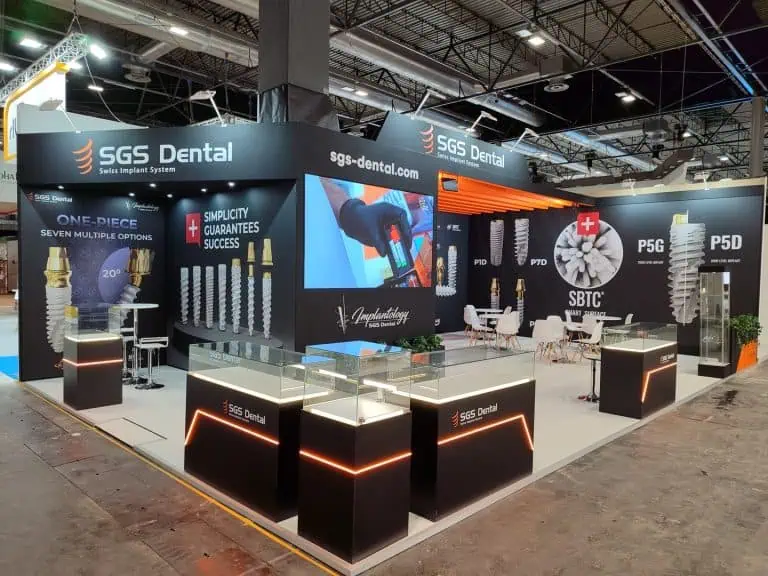
In 2026, digital interactivity is a baseline expectation at premium trade fairs, not a differentiator. Touchscreen product configurators, AR/VR demonstration stations, LED video walls, and live data dashboards are now standard at top-tier European events. The stands that stand out are those where technology is seamlessly integrated into the structure rather than bolted on as an afterthought.
5. Operational Efficiency
Staff fatigue is a real performance drain at multi-day trade fairs. Stands with poorly placed storage, inadequate private briefing spaces, or inefficient counter positioning reduce team effectiveness over long show days. High-performing custom designs incorporate staff workflow into the brief from the start — with concealed storage, dedicated back-office areas, and ergonomic counter heights.
Choosing the Right Stand Type for Your Space and Budget
Not all custom exhibition stand design begins from the same starting point. The stand type you select should be driven by your allocated floor space, the nature of the trade fair, and your primary objectives for the show. There are four primary stand configurations used at European trade fairs, each with distinct advantages.
Inline (Linear) Stands
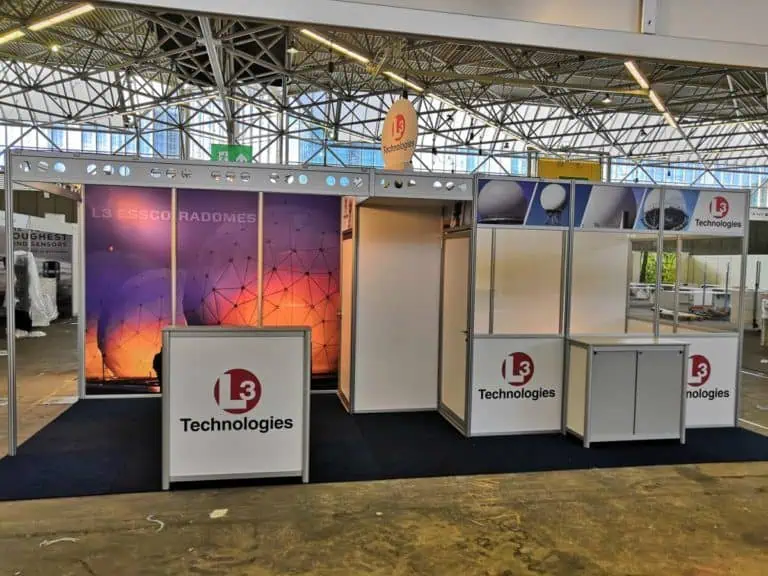
Inline stands occupy a single row position with aisle access on one side. They are the most common configuration at European exhibitions and are typically available in 3mx3m (9m2) increments. Well-designed inline stands use tall backwall graphics, elevated product displays, and strategic counter positioning to maximise their limited frontage. Custom inline stands consistently outperform shell scheme equivalents of the same dimensions.
Corner Stands
Corner positions provide aisle access on two sides, significantly increasing visibility and visitor approach angles. They are typically 20-30% more expensive to hire than comparable inline positions, but the additional exposure often justifies the cost. Custom designs for corner positions should exploit both aisle frontages with differentiated visual messaging to capture visitors approaching from each direction.
Peninsula Stands
Peninsula stands back onto a neighbouring exhibitor’s booth and have three open sides — two aisles and one end cap. They provide excellent visibility and allow for more ambitious structural designs, including raised platforms, suspended signage, and multi-zone layouts. Peninsula configurations are common in the 36-100m2 range and are ideal for companies with product ranges that benefit from zoned display environments.
Island Stands
Island stands are the flagship configuration: standalone structures surrounded by aisles on all four sides, typically starting at 100m2. They offer the greatest design freedom, allowing for multi-storey structures, fully enclosed meeting suites, and immersive brand environments. Island stand budgets at major European fairs typically range from 50,000 EUR to 500,000 EUR or more for design, build, and installation.
Whichever configuration you choose, our comprehensive exhibition services cover the full project lifecycle — from initial space planning and 3D design through fabrication, logistics, and on-site installation at 50+ European trade fairs annually.
Materials, Finishes, and Sustainability in 2026
The materials used in custom exhibition stand design have evolved dramatically over the past decade, driven by three converging forces: the demand for higher-quality brand aesthetics, the push for sustainable construction practices, and the practical economics of reusable stand systems. Understanding the current material landscape helps exhibitors brief contractors more effectively and make build-versus-rent decisions with confidence.
Aluminium System Profiles
Lightweight aluminium extrusion systems form the structural backbone of the majority of European exhibition stands. Modern aluminium profiles are precision-engineered to accept a wide range of infill panels, graphics, and digital screens. They are durable, easily transported, and fully reusable across multiple shows. At Adam Expo Stand, we use proprietary aluminium system profiles that allow same-day reconfiguration on the show floor — critical when last-minute adjustments are needed after stand delivery.
High-Pressure Laminate and Timber Composites
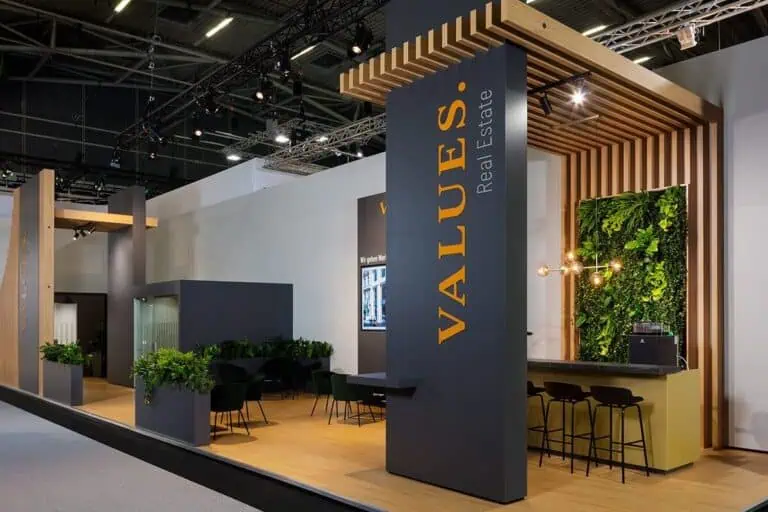
For premium stands where brand image demands a high-end finish, high-pressure laminate (HPL) panels, veneered timber composites, and solid surface materials create a tactile quality that aluminium alone cannot achieve. These materials are heavier and less reusable than aluminium, but their impact on brand perception — particularly in luxury, financial services, and healthcare sectors — makes them the right investment for companies where credibility is a primary sales driver.
Fabric Tension Systems
Seamless fabric tension systems, which stretch graphics across lightweight aluminium frames, have largely replaced PVC-printed panels for large-format graphics in European stands. They are lighter, more transportable, easily updated for different shows, and produce a dramatically better visual result at close viewing distances. LED-backlit fabric panels, in particular, have become a signature of premium stand design at fairs like Fira Barcelona and Messe Frankfurt.
Sustainability and Reusability
European trade fair organisers — including Messe Frankfurt, which has its own sustainability certification framework — are increasingly applying sustainability criteria to stand construction. In 2026, 67% of European exhibitors surveyed by UFI (the Global Association of the Exhibition Industry) stated that stand reusability was a significant factor in their contractor selection. Modular stand systems that can be reconfigured across multiple shows reduce per-event costs by 30-50% over a three-year period compared to fully custom builds designed for a single show.
For a deep dive into reusable stand options, explore our in-depth guides on Medium where we regularly publish case studies on modular stand ROI and sustainable exhibition design.
Visitor Flow and Engagement Zone Planning
One of the most underestimated elements of custom exhibition stand design is the deliberate planning of how visitors will physically move through and interact with the stand. Most exhibitors focus on what the stand looks like from the aisle. High-performing exhibitors focus on what happens inside the stand, and in what sequence.
The Three-Zone Engagement Model
The most effective stand layouts follow a three-zone engagement model, which mirrors the buyer journey. Zone 1 — Attraction (aisle edge): High-visibility graphics, dynamic digital content, and open physical space that draws visitors off the aisle. This zone should have no barriers and should be staffed by outward-facing team members trained to initiate light, non-pressured engagement. Zone 2 — Demonstration (stand centre): Product displays, interactive demonstrations, or capability showcases where the brand story is told and visitors’ attention is held. Zone 3 — Conversion (stand interior): Semi-private or fully enclosed meeting areas where qualified conversations happen. Visitors who reach Zone 3 are self-selecting as serious prospects, and the stand design should make this space feel exclusive, calm, and professional.
Traffic Flow Principles
Visitor traffic at European trade fairs predominantly flows from left to right as visitors move down aisles — a behavioural pattern well-documented in retail and exhibition research. Stands positioned to receive left-side traffic should place their primary visual anchor on the left-hand frontage. Counter heights of 900-1,100mm (seated conversation) versus 750mm (standing interaction) can be used strategically to signal different levels of engagement depth to approaching visitors.
Stay up to date with the latest visitor engagement strategies by subscribing to our Substack newsletter, where our design team shares data-driven insights from live shows across Europe.
Briefing Your Exhibition Stand Contractor
The quality of your brief is directly correlated to the quality of your stand design. Experienced contractors like Adam Expo Stand work best when clients arrive with a structured brief rather than a vague request for something impressive. A good brief gives the design team the context they need to make informed decisions about structure, materials, and visitor journey — and it dramatically reduces revision cycles and timeline overruns.
Essential Brief Elements
Show and floor space details: Include the trade fair name, hall number, stand position reference, floor dimensions in metres, and any venue-specific restrictions. Height limits are common — Fira Barcelona Gran Via enforces a 4.5m standard maximum, while some Messe Frankfurt halls allow 6m or more. Objectives and KPIs: Define what success looks like. Are you generating leads, launching a product, hosting client meetings, or building brand awareness? Each objective drives different design decisions. Brand guidelines: Provide your full brand guidelines document, including colours in CMYK and RAL/Pantone references, typography, imagery style, and any preferred material palette. Practical requirements: Number of staff working the stand simultaneously, number of private meeting spaces required, storage volume needed, AV and technology requirements, and any product display specifications. Budget parameters: Sharing your budget range enables the contractor to propose the highest-impact solution within your parameters rather than designing speculatively.
Build Timelines and Budget Planning for European Trade Fairs
One of the most common and costly mistakes in custom exhibition stand design is leaving contractor selection and brief development too late. European trade fairs operate on tight build schedules, and premium contractors book out months in advance — particularly for high-profile events like MWC Barcelona in February and March, Hannover Messe in April and May, and MEDICA Dusseldorf in November.
Recommended Lead Times
For major international fairs with 100,000 m2 or more of floor space, begin contractor briefing 6-9 months before the show. This allows time for concept development, design revisions, material procurement, fabrication, and pre-build quality checks. For first-time exhibitors at events like MWC or Hannover Messe, nine months is strongly recommended. For mid-size national and regional fairs, 3-6 months is typically sufficient for stands up to 50m2. For compact stands under 20m2, experienced contractors can often deliver quality custom designs within 6-8 weeks — but building in buffer time always pays off.
Budget Benchmarks for European Stand Builds
Exhibition stand costs in Europe vary significantly by stand type, location, material specification, and contractor. Based on Adam Expo Stand’s 2025-2026 project portfolio: a 9m2 inline custom stand with aluminium frame, fabric graphics, basic lighting, and a single counter typically ranges from 8,000 EUR to 15,000 EUR including design, fabrication, and installation. A 36m2 corner or peninsula stand with product display zones, meeting area, and integrated AV runs 25,000 EUR to 55,000 EUR. Island stands of 100m2 and above at major international fairs typically start at 80,000 EUR and can exceed 300,000 EUR for multi-storey, fully immersive brand environments. These figures exclude stand hire fees payable to the venue, which can add 20-40% to the total budget at flagship events.
Follow us on LinkedIn for regular updates on exhibition stand cost trends, design inspiration, and exhibitor strategy from our team across Europe.
Expert Tips from Adam Expo Stand’s Design Team
After 15 years and 639+ stands built across Europe, here is what our designers want every exhibitor to know:
- Height is your most underused asset: Most exhibitors focus on floor space, but vertical space is often the most powerful differentiator. A suspended logo element or backlit structure at 3-4m height is visible from across a hall and costs a fraction of additional floor area. At IFEMA Madrid and Fira Barcelona, height restrictions range from 4m to 6m depending on the hall — always check and exploit the maximum allowed.
- Brief for the back of the stand, not the front: Most exhibitors design for aisle visibility and forget to plan the conversion zone at the rear. Private meeting spaces, comfortable seating, and a subtle change in floor covering or lighting immediately signal to a visitor that they have entered a more serious engagement environment — and dramatically increase close rates.
- Reuse is a strategy, not a compromise: The most cost-effective stands are modular systems designed from day one for multi-show reuse. With proper planning, a 40,000 EUR initial investment can serve your brand across 6-8 shows over three years — a cost-per-show of under 7,000 EUR, including storage and reconfiguration.
- Build timeline buffer always pays off: In 15 years, no project has ever been delayed by having too much lead time. Almost every project crisis traces back to a brief submitted too late. Aim to have your contractor appointed no less than four months before your show, regardless of stand size.
See Our Exhibition Stand Design Process in Action
Frequently Asked Questions
How much does custom exhibition stand design cost in Europe?
Custom exhibition stand design costs in Europe range from approximately 8,000 EUR for a compact 9m2 inline stand to 300,000 EUR or more for a large island stand at a flagship international fair. The cost depends on stand size, structural complexity, material specification, technology integration, and the specific trade fair venue. Adam Expo Stand provides transparent, itemised quotations for all projects, covering design, fabrication, logistics, installation, and dismantling — so you know the full cost before committing. We also offer free 3D design consultations for all new clients before any financial commitment.
How far in advance should I book an exhibition stand contractor?
For major international trade fairs such as MWC Barcelona, Hannover Messe, or MEDICA Dusseldorf, we recommend appointing your contractor 6-9 months before the event. For regional or national fairs, 3-4 months is typically sufficient for stands under 50m2. The earlier you engage a contractor, the more design time is available — and the better the outcome. Adam Expo Stand books up quickly for premium shows, so early engagement is strongly advised to secure your preferred design team and timeline.
What is the difference between a custom stand and a modular stand?
A custom exhibition stand is designed and fabricated specifically for one brand, with bespoke structural elements, unique architectural features, and tailored material specifications. A modular stand uses a pre-engineered, reconfigurable system — typically aluminium profiles with interchangeable panels — that can be adapted across multiple shows. Custom stands offer the highest brand differentiation; modular stands offer flexibility and lower per-show cost. Adam Expo Stand designs both, and increasingly recommends hybrid approaches that combine a bespoke core structure with modular peripheral elements for maximum value across a multi-show programme.
Which European trade fairs does Adam Expo Stand work at?
Adam Expo Stand designs and builds exhibition stands at 50+ European trade fairs annually, including IFEMA Madrid (FITUR, SIMA, ARCO), Fira Barcelona (MWC, ISE, Smart City Expo), Messe Frankfurt (Automechanika, Ambiente, Light+Building), Messe Dusseldorf (MEDICA, drupa, interpack), ExCeL London, and Fiera Milano (EICMA, Salone del Mobile). Our multilingual teams operate across Spain, France, Germany, Portugal, the UK, and Italy, providing local expertise at each venue.
Can I reuse my custom exhibition stand at multiple shows?
Yes — and this is something Adam Expo Stand plans for explicitly at the design stage. We engineer all custom stands with reusability in mind, using modular connection systems, flat-pack crating, and labelled component inventories that make rebuilding straightforward. Many of our clients reuse stand elements across 5-8 shows over a three-year period, dramatically reducing their per-event design and fabrication costs. Post-show storage and maintenance services are available from our facilities in Spain and Germany.
What information do I need to brief an exhibition stand designer?
A strong brief includes your trade fair details (event name, venue, stand dimensions, hall position), your primary objectives for the show (lead generation, product launch, brand awareness), your brand guidelines (colours, typography, imagery), your practical requirements (number of staff, meeting spaces, storage, AV), and your budget range. The more specific your brief, the more effectively Adam Expo Stand’s design team can propose solutions that maximise your investment. We offer a free 3D design consultation for all new clients to explore options before any commitment is made.
Recommended Reads
- The Complete Guide to Exhibition Stand Design — How to create a stand that drives results at any trade fair
- Modular Exhibition Stands: Flexibility Meets Impact — Sustainable, reusable stand solutions for frequent exhibitors
- Full-Service Exhibition Solutions — End-to-end stand management across 50+ European trade fairs
Ready to Create Your Perfect Exhibition Stand?
Get a free consultation and 3D design concept from Adam Expo Stand Trade Show Booth Design and Build — Europe’s trusted exhibition stand specialist for IFEMA Madrid, Fira Barcelona, Messe Frankfurt, and 50+ European trade fairs.