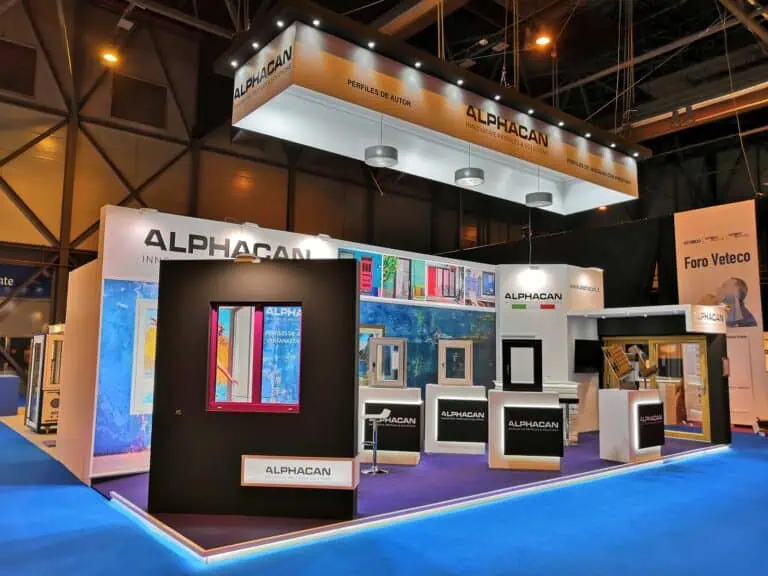
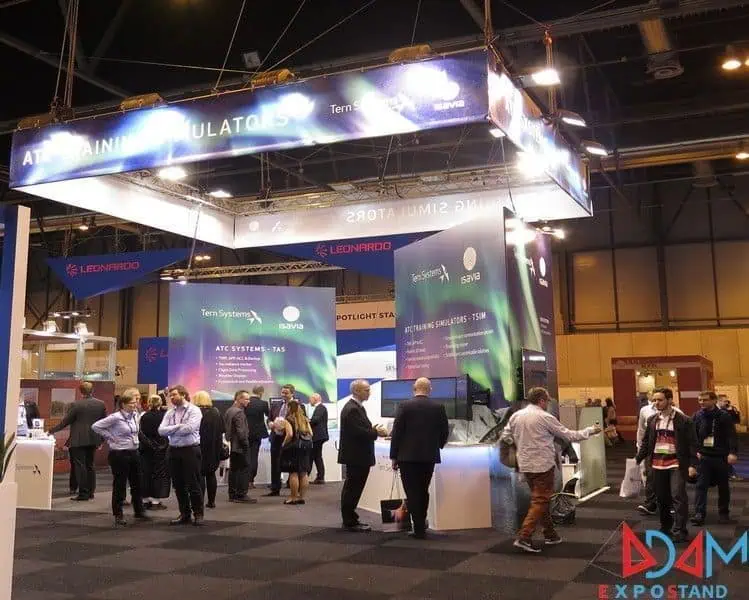
Reusable exhibition stands contain components intended for another appearance: frames, displays, counters, graphics, lighting or packing cases. Their value depends on the next layout, condition, ownership and return arrangements. Specify the repeat-use programme before buying, and compare its complete costs with rental and alternative builds.
Reuse can avoid making some replacement items. It does not establish a fixed saving, carbon reduction, service life or commercial return. A custom-built display can also be reusable; a modular system still has configuration limits and recurring costs.
Choose reusable exhibition stands around your event programme
List confirmed events separately from possible appearances. Record plot dimensions, open sides, products, demonstrations, meetings and the people operating them. Check each current event manual and the inclusions of your booking before selecting additional construction.
Ask the supplier to show proposed configurations for the spaces you actually expect to use. Identify retained parts, additional fittings and replacement graphics. A system described as flexible does not automatically convert a row stand into an island or support a taller structure without redesign and technical checks.
| Decision | Information to obtain |
|---|---|
| Retain a modular system | Compatible parts, configuration drawings, condition, assembly requirements and available replacements |
| Retain custom displays | Dimensions, construction details, disassembly method, protective packing and next-event fit |
| Rent selected components | Available inventory, event package, ownership, return obligations and damage terms |
| Use portable displays | Actual packed size and weight, carrying arrangements, assembly instructions and display limitations |
Combine options where useful. For example, a reusable frame and a product-specific counter may answer different parts of the brief. Approve the working layout before assuming every item can be kept or every future space accommodated.
Check materials, connections and graphics
Obtain specifications for the actual components. Aluminium, timber and fabric labels do not establish suitability, durability or environmental performance for every product. Check connections, finishes, repair options and the conditions in which the items will be handled.
Review product displays and equipment with the responsible technical team. Repeated assembly, shelves, screens and suspended items need appropriate specifications and installation methods. A marketing description such as “tool-free” does not remove the need for instructions, competent people or required event approvals.
Give graphics their own reuse plan. Confirm dimensions, attachment, approved message, language and future campaign relevance. Follow the supplied cleaning and packing instructions; rolling is not the correct method for every printed surface or fabric. Record which panels must be replaced for another event.
For material claims and samples, use the booth materials specification guide alongside the product documentation. Certification must relate to the product or organisation and scope actually claimed.
Compare the full cost of repeated use
Include initial design and purchase, adaptations, graphics, packing, outward and return transport, handling, installation, dismantling, storage, inspection and repairs. Include event services and relevant taxes consistently across alternatives. Obtain current written quotations and mark estimated items clearly.
A retained frame can avoid a new frame purchase while still requiring transport and labour at every appearance. Renting may avoid ownership and storage responsibilities, but the package and return conditions matter. Neither arrangement is automatically the cheaper option after two or three shows.
Compare the same event programme, activities and delivery responsibilities. Test what changes if an event is cancelled, a footprint changes or a damaged component needs replacement. Agree accounting treatment with your finance team rather than assuming a universal depreciation period.
Keep cost comparison separate from sales return. Lower stand expense does not prove more leads or revenue. Review attributable commercial outcomes against complete participation costs and a stated measurement method.
Make storage and return part of the order
Agree who owns and keeps each component after dismantling. Name the party responsible for collecting, packing, transporting and receiving it. Include inventory, condition photographs, missing-parts reporting and the point at which a repair requires approval.
Confirm storage location, suitable conditions, access arrangements, charges and release procedure. Establish how far ahead the next dispatch must be requested. The between-event stand storage guide explains the records to agree with a provider.
Before each appearance, reconcile inventory with the approved layout. Inspect condition and arrange replacements, graphic updates and technical checks. A five-year warranty, where offered, is different from evidence that a particular component will remain suitable for every planned show.
Document environmental results
Keep records of components retained, replaced and discarded. Identify quantities and the basis of measurement. Confirm the collection or processing route for the actual finished materials, including coatings, adhesives and mixed construction.
The IFEMA MADRID sustainable participation guide offers practical material and reuse planning references. Its guidance does not certify your stand or establish a measured saving for it.
For a carbon claim, define the comparison, lifecycle boundary, transport assumptions and calculation method with a qualified assessor. Smaller packed volume does not by itself prove fewer vehicle journeys or a particular emissions reduction. Describe verified reuse specifically instead of calling the complete project zero waste without evidence.
Confirm event requirements for every configuration
Retained components still need to meet the requirements of their new use. Check the organiser’s current manual and the relevant venue documents, including IFEMA regulations or Fira participation regulations when applicable. Resolve technical submissions and access dates with the responsible team.
Frequently asked questions
How many times can a reusable stand be used?
There is no universal number. Check the specified system, condition, maintenance, replacement availability and suitability for later layouts. Review actual condition before each use.
Are reusable stands suitable for larger spaces?
Some systems and custom components can serve larger layouts. Ask for the proposed configuration and technical assessment; adding modules does not permit unlimited height or size.
What should I send when requesting a proposal?
Share event plans, activities, retained-item information, budget and dates. Request a comparison of reuse, rental and purchase with responsibilities and complete costs stated.
Follow our exhibition planning guides
Choose Adam Expo Stand as a preferred source to help you find our exhibition guides and updates on Google.
Add as a preferred source on GoogleGoogle may ask you to sign in and confirm your choice.