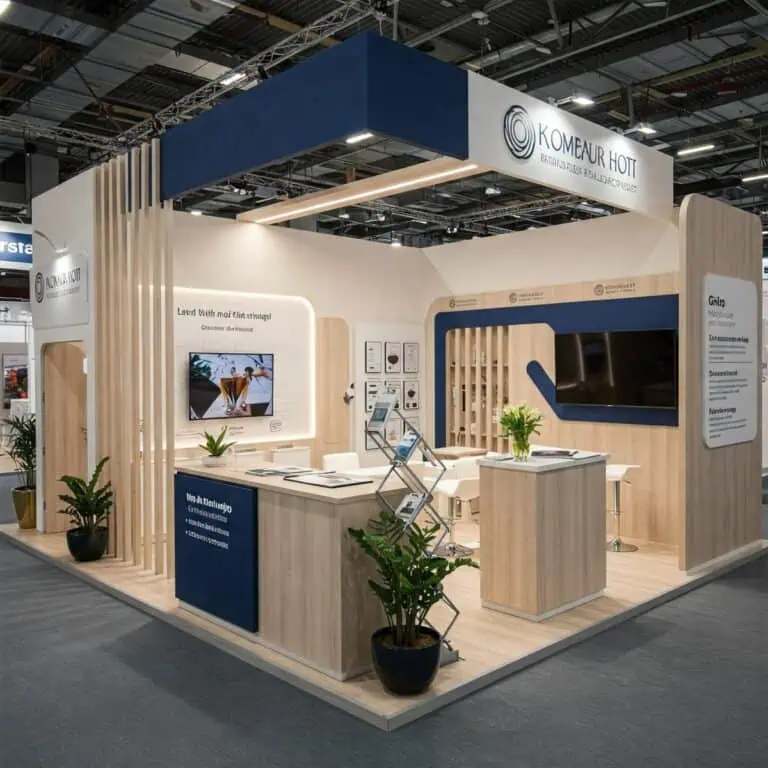
Plan your RAI Amsterdam exhibition stand around the booked event, hall and footprint. Before approving a design, confirm visitor activities, technical requirements, delivery arrangements and the full budget. This guide covers the brief, supplier scope, approvals, installation, reuse and post-event review.
A practical exhibition stand design makes the offer clear and gives staff room to demonstrate products and hold meetings. Compare custom and modular exhibition stand services against the same brief. Record what the supplier will deliver and what your team must provide.
Choosing a Stand Builder for RAI Amsterdam
When choosing a stand builder for RAI Amsterdam, ask for relevant completed projects and a named project manager. Give the supplier the event manual, hall plan, stand number, dimensions and open sides. Request a written responsibility list for drawings, approvals, service orders, delivery, installation and dismantling.
Designing for the Booked Hall and Event
Design from the actual booked space and current event requirements. Check heights, access, structural needs, equipment and services before production. Review RAI’s facility regulations alongside the organiser’s event-specific manual. Do not treat a venue-wide sustainability ambition as proof that a particular design meets every event requirement.
Planning Demonstrations and Meetings
For a technology demonstration, identify the equipment, power, network needs, viewing positions and staff tasks before deciding the layout. Separate short demonstrations from longer conversations where space allows. Test the actual presentation and prepare an offline fallback. Ask the supplier to confirm the approval and service-order scope rather than assuming it will handle every submission.
Understanding Exhibition Stands
The stand should support the activities planned for the event. Define what visitors need to understand, see or try, and the next step your staff will offer. Translate those needs into a layout, graphics brief, equipment list and handover checklist.
What Makes a Great Exhibition Stand?
A usable exhibition stand combines clear messaging, visible products and workable visitor routes. Check that counters, furniture and demonstrations fit within the footprint without blocking entry. Review the design from the aisle and from the visitor’s position, including readability and screen visibility.
Construction Options and Reuse Checks
Modular and custom describe construction approaches. Reuse and environmental performance need their own evidence, whichever approach you select.
- Modular: Check compatible components, permitted layouts and the parts needed for future events.
- Custom: Review the bespoke layout, production requirements and reusable sections.
- Reuse and waste: Request evidence and an end-of-use plan for either construction approach.
How to Choose the Right Stand for Your Brand
Compare layout, total service cost, production dates and future use. A modular system may support compatible layouts, while a custom design can address specific geometry or product needs. Either can include reusable components. See the modular versus custom comparison for practical checks.
Why RAI Amsterdam?
Choose an event based on its audience and your objectives, then plan for the venue and hall allocated to that event. RAI Amsterdam’s venue information is useful context, but the organiser’s current manual and your booking establish the details needed for the stand brief.
Key Features of RAI Amsterdam as a Venue
Ask for the hall and stand plan showing the booked dimensions, open sides and nearby features relevant to the layout. Confirm usable height, floor and rigging requirements through the current technical documents. Avoid designing a tall display or suspended sign on the assumption that every hall permits the same structure.
Checking Your Selected Event
For your selected trade show, verify the current dates, venue, hall allocation and exhibitor deadlines with the organiser. Check the visitor profile and decide which products, demonstrations and meetings justify the space. A well-known event name alone does not establish fit or guarantee enquiries.
How RAI Amsterdam’s Layout Impacts Booth Design
Design within the booked footprint and confirmed open sides. Position the main message where approaching visitors can see it, keep entry and circulation clear, and allow room for demonstration queues inside the stand. Check furniture, doors, storage and equipment against the scaled plan before approving it.
How to Plan Your Exhibition Stand
A useful plan connects the design and delivery workflow with approval dates and named owners. Keep the brief, drawings, artwork and service orders under version control so the production team works from the approved information.
Step by Step Guide to Planning Your Booth
First define the audience, offer and intended visitor activity. Then confirm the footprint, budget and equipment. Request a layout and itemised delivery proposal, review the drawings and graphics, and agree production and installation milestones. Assign someone from your team to approve changes and accept the stand at handover.
Timeline: When to Start Designing and Building
Work backwards from the organiser’s drawing, service-order, artwork and build-up deadlines. Ask the supplier to confirm capacity and the dates needed for production and transport. Start once the event and footprint are confirmed; no fixed number of months guarantees that every design can be delivered.
Checklist for a Successful Trade Show Booth
Before production and delivery, review these four areas:
- Brief and layout: Confirm the footprint, open sides, activities and approved drawings.
- Technical scope: Assign approvals, equipment and service orders to named owners.
- Staff: Agree roles, demonstration steps and escalation arrangements.
- Handover: Set a time to inspect graphics, equipment, storage and routes before opening.
Close any gaps before approving production, and record changes to scope, price or delivery dates in writing. Keep the approval record available to the project manager and installation team.
What Are the Costs of Exhibition Stands in Amsterdam?
Amsterdam stand costs depend on the design, quantities, event and service scope. Compare itemised proposals using the same brief, including separately ordered venue services. For a detailed budgeting checklist, see our European exhibition stand cost guide.
Factors That Influence Pricing
Review these cost drivers in the actual proposal:
- Structure and finishes: Check quantities and the approved design.
- Graphics and equipment: Include production, rental, content and support needs.
- Delivery: Confirm transport, handling, installation and removal scope.
- Reuse: Compare storage, repairs and future changes for modular and custom options.
Separate initial design and production costs from recurring transport, installation, repairs, graphics and storage. Check allowances, exclusions, currency and taxes so the comparison reflects the full event cost.
Budget Friendly Options Without Compromising Quality
To control the budget, prioritise the activities essential to your brief. Compare rented equipment and reusable components where appropriate, and simplify nonessential finishes before removing useful meeting or demonstration space. Request a revised scope and price when changing the design.
Hidden Costs to Watch Out For
Confirm freight, unloading, installation, electrical connections, internet, cleaning, dismantling and return or storage arrangements where relevant. Ask who orders and pays for excluded services. A turnkey label does not establish an all-inclusive price; review the turnkey stand buyer’s guide for responsibility checks.
How to Make Your Booth Stand Out at RAI Amsterdam?
Clear graphics and branding help visitors understand the offer. Use a concise headline, relevant product imagery and a visible invitation to talk or watch a demonstration. Check the design at realistic viewing distances rather than relying only on a close-up render.
Creative Design Ideas to Attract Visitors
Choose one main visitor activity and give it enough space to work. A product demonstration, comparison display or short guided interaction can be useful when it answers a buyer’s question. Check sightlines, staff positions and queues before adding decorative structures or a photo area.
Using Technology: AR, VR, and Interactive Displays
Use AR, VR or touchscreens only when they explain the product better than a simpler demonstration. Allow time for briefing, cleaning or resetting equipment, and provide an alternative for visitors who prefer not to use it. Test lighting, sound, power and connectivity with the actual content before opening.
Incorporating Local Amsterdam Themes into Your Booth
A local visual reference can suit the brand, but it should not obscure the offer or take space from visitor activities. Review any café-style seating or decorative feature against the layout, storage and meeting needs. Use readable graphics and consistent terminology for the intended audience.
Sustainability in Exhibition Stands
Plan reuse and waste handling as part of the brief. RAI announced its participation in the Better Stands programme in May 2025, encouraging reusable stand solutions. Check how the programme and any event-specific requirements apply to your show; this does not mean every stand is automatically certified.
Documenting Reuse Before Making Environmental Claims
Identify which structure, graphics, flooring and furniture will return to use after the show. Record ownership, condition checks and storage or return arrangements. Make specific claims about those components and the evidence available, rather than describing the entire booth as eco-friendly without qualification.
Materials and Practices for Sustainable Booth Design
Ask for material specifications, relevant certificates and the proposed reuse or waste route. Evaluate lighting by its actual equipment and operating needs. Recycled content or a particular material name alone does not establish the impact of the complete stand; transport, replacements and end-of-use arrangements also matter.
How to Reuse and Recycle Your Booth Components
Before dismantling, list the items to return, store, repair or send through an agreed waste route. Label reusable parts and protective cases, record their condition and assign responsibility for collection. Confirm what the next event would require before treating future reuse as certain.
FAQs
These answers provide planning checks. Confirm the details for your event and proposal using the current organiser and venue information.
How Do I Ensure My Booth Complies with Local Regulations?
Check RAI’s current facility regulations and the organiser’s event manual, then identify the drawings, material information and approvals required for your design. Name the party preparing and submitting each item and track the response. A builder’s past venue experience does not replace a review of current requirements.
What Are the Logistics of Transporting and Storing Booths?
RAI’s logistics information states that advance loading and unloading reservations are required when arranging your own delivery. Confirm the procedure for your vehicle and event; an unloading reservation is separate from personnel access registration. Check the current event traffic instructions and agree booking, unloading, handling, dismantling and collection responsibilities. Confirm storage location, charges and ownership separately with the supplier.
How Can I Measure the ROI of My Exhibition Stand?
Agree measurable objectives before the event, such as completed demonstrations, relevant conversations or meetings. These activity counts are not financial return on investment. For a financial assessment, calculate ROI as (attributable profit before exhibition costs minus full exhibition costs) divided by full exhibition costs, multiplied by 100. State the attribution period and assumptions. Treat potential pipeline separately from realised profit. Our engagement planning guide covers practical activity checks.
Lighting, Staffing and Post-Event Checks
The build is only part of event preparation. Lighting, staff briefing, handover and post-event review need assigned owners and time in the schedule. Test these arrangements before the event opens.
The Role of Lighting in Booth Design
Check lighting with the actual products, graphics and screens. Avoid glare on displays and confirm that visitors can read the main message and see the demonstration. Include equipment, connections and installation responsibilities in the scope, and test the finished stand before accepting it.
How to Train Your Booth Staff for Maximum Engagement
Brief staff on the offer, demonstration steps, qualifying questions and the agreed next action. Assign roles for welcoming, demonstrations and meetings, with breaks and cover for busy periods. Practise short explanations and make sure the team knows how to escalate equipment or visitor issues.
Post Event Strategies: What to Do After the Trade Show
After the show, review the agreed objectives, recurring visitor questions and any delivery problems. Your team can use the recorded next steps to manage follow-up through its existing process. Compare activity counts and attributable results with the full cost, then record what should change for the next event.
Final Planning Checks
Choose a stand proposal that fits the booked space, intended visitor activities, full budget and delivery schedule. Verify responsibilities and approvals before production, then check the finished stand against the agreed brief.
Key Decisions to Confirm
Keep these decisions visible in the project plan:
- Dates: Confirm approvals, artwork, service orders and installation milestones.
- Layout: Match the design to the footprint and visitor activities.
- Team: Assign staff roles and handover acceptance.
- Reuse: Record ownership, returns, storage and waste routes.
- Review: Track agreed activities and event costs using stated assumptions.
Review the plan with the exhibitor decision maker and supplier manager. Confirm the final approved drawings, outstanding service orders and handover appointment before delivery.
Discuss Your RAI Amsterdam Exhibition Stand
Discuss your RAI Amsterdam event, booked footprint, visitor activities, budget and delivery needs with Adam Expo Stand. Ask for a proposal with clear inclusions, exclusions, approval dates and reuse arrangements.
RAI Amsterdam delivery and handover record
Use a short responsibility record alongside the approved drawing. The entries below are planning checks; the applicable times and permissions must come from your event documentation.
| Stage | Information to record | Responsible party |
|---|---|---|
| Freight | Booking, vehicle instructions, unloading and handling arrangements | Named transport or logistics contact |
| Installation | Access registration, build window, services and outstanding approvals | Contractor project manager |
| Handover | Inspection time, demonstration test and defect list | Exhibitor representative and contractor |
| Return | Collection, packaging, component condition and storage destination | Named return or storage contact |
RAI’s build-up and breakdown admission policy requires registration for people accessing those periods. Assign the personnel registration separately from the vehicle booking and confirm both before dispatch.
Venue sources reviewed on 12 October 2026: facility regulations, logistics information and the Better Stands announcement linked above. Send Adam Expo Stand your event documents and plot to discuss a specific scope and delivery schedule.
Follow our exhibition planning guides
Choose Adam Expo Stand as a preferred source to help you find our exhibition guides and updates on Google.
Add as a preferred source on GoogleGoogle may ask you to sign in and confirm your choice.