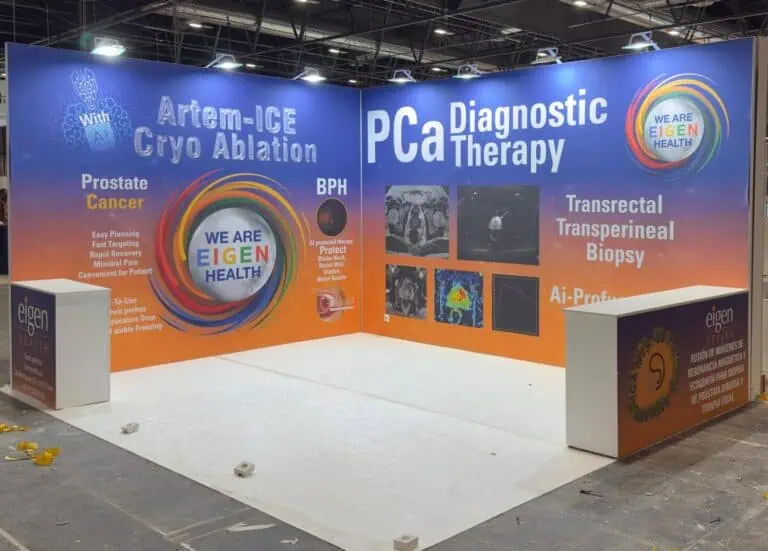
Custom exhibition stands are designed around a particular brief, plot and brand presentation. Begin with what visitors need to do: inspect products, watch a demonstration, ask technical questions or meet the team. A tailored structure is useful when it supports those activities within the event’s requirements and project budget.
Turn objectives into a layout brief
List the target audience and the conversations you want to support. Give the designer the allocated plan, dimensions, open sides, columns and service points. Include products, equipment, staffing, meeting needs, storage and working languages.
Explain the main message in plain language and provide approved logos, artwork and product information. Identify provisional decisions and the people authorised to approve changes. AUMA’s trade fair briefing guide sets out the importance of objectives, messages and responsibilities.
Review activities before decoration
Ask for a plan showing visitor entry, product viewing, demonstrations, meetings and staff movement. Check the space used by people as well as furniture. A display may fit on paper while leaving too little room for someone to inspect or operate it.
- Product inspection: visibility, supports, access and handling.
- Demonstrations: presenter, audience position, services and reset.
- Meetings: seating, privacy, documents and team coverage.
- Storage: actual materials, access and restocking.
- Branding: a clear message visible from the intended approach.
Compare construction options
A custom design may use purpose-built elements, modular components, rental equipment or a mixture. These choices should follow the brief. A second level or overhead feature requires specific feasibility and approval checks; it is not automatically available because the stand is custom.
For several events, review the full calendar and plots. Identify reusable components, compatible configurations and any new graphics. Reuse depends on condition, handling, storage and later requirements; it should be planned rather than assumed.
Test graphics, lighting and technology
Give brand, offer and product information a readable hierarchy. Review artwork at the intended dimensions and viewing distance. Use product samples to test lighting, colour, glare and reflections where relevant.
Add screens or interactive content when they explain something useful. Confirm content, operator, power, connection, sound and a fallback. A touchscreen or immersive feature does not guarantee attention or qualified enquiries.
Check technical preparation
Use the event’s current manual for construction limits, drawings, materials, services, access and removal. Assign responsibility for each submission and order. Ask the designer and appropriate technical specialists to review equipment loads, structures and operating requirements.
A concept render is not an approval or production drawing. Agree the information needed before fabrication and keep the final specifications available to the installation team. Use the IFEMA regulations page as a starting point for Madrid events, alongside the specific show instructions.
Build a complete budget and schedule
Compare itemised quotations covering design, production, graphics, equipment, transport, handling, installation and dismantling. Identify venue services, taxes, optional items and exclusions. Record the price and timing effect of approved changes.
Plan backwards from handover through access, production, technical approval and artwork sign-off. There is no universal six- or eight-week timetable. Confirm capacity and milestones for your actual design and event.
Review handover and the next use
Check layout, stability, finishes, graphics, lighting and equipment with the responsible team. Record outstanding work and agree support contacts. Plan dismantling, packing and return before opening.
After the fair, compare the stand’s operation with the original brief and inspect retained components. Track relevant conversations and later outcomes separately from general visitor counts. A custom design is an investment to assess against evidence, not a guarantee of commercial success.
How do we begin? Send the event, allocated plan, activities, products and budget scope to discuss a custom exhibition stand brief. Review completed projects for practical examples.
Follow our exhibition planning guides
Choose Adam Expo Stand as a preferred source to help you find our exhibition guides and updates on Google.
Add as a preferred source on GoogleGoogle may ask you to sign in and confirm your choice.