A useful medical trade show booth helps visitors understand your offer, see an approved demonstration and arrange the next conversation. Start with the audience and activity. These ten ideas translate a device, dental or pharmaceutical brief into layout, graphics, staffing and follow-up decisions that fit the event and available space.

10 medical trade show booth design ideas
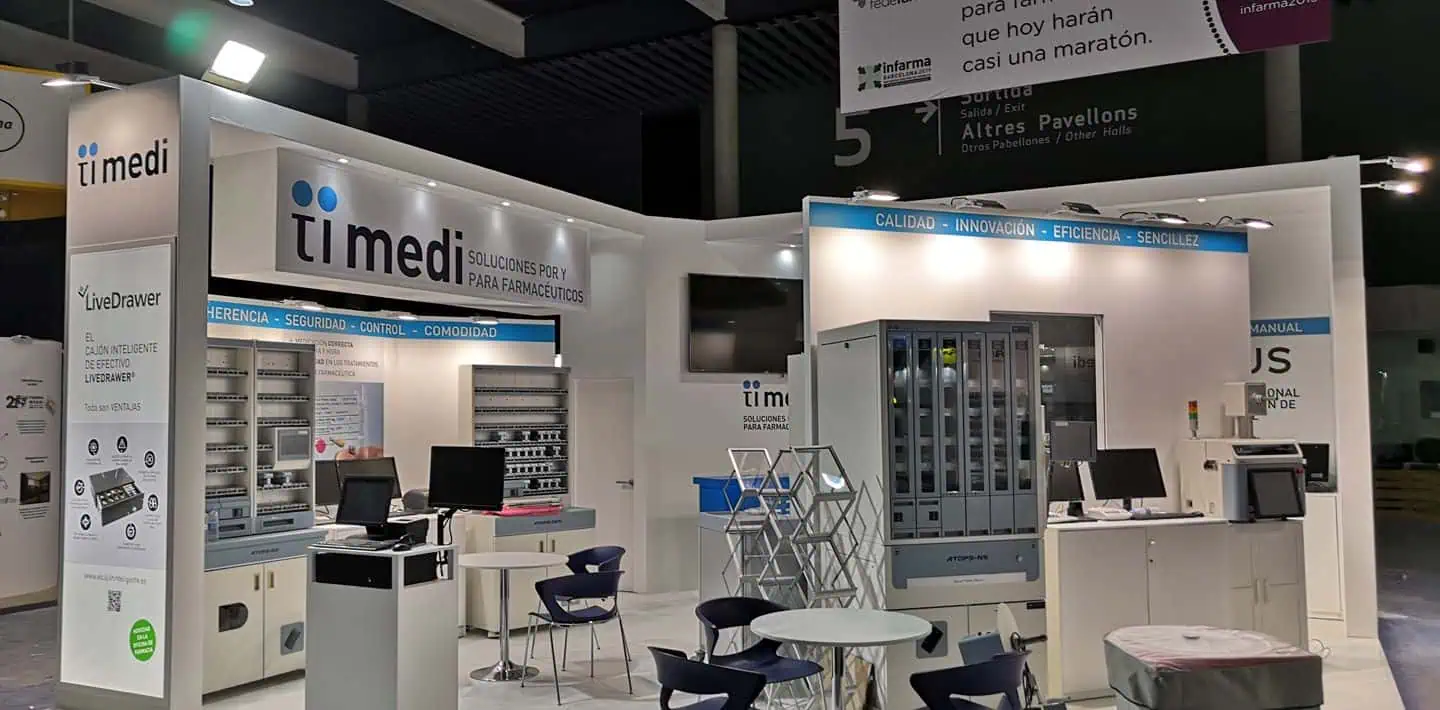
- Make the layout serve the activity: Begin with the allocated footprint, open sides and products. Locate the welcome, demonstration, meeting and storage areas so visitors and staff can use them without competing for the same space. Ask for a layout drawn to the real dimensions.
- Use graphics to explain the offer: Show the product category and a concise approved message at a readable scale. Light the product and working area appropriately. Use a screen only when its content helps explain something the physical display cannot.
- Plan the demonstration sequence: Define what visitors will see, who presents it, how long it takes and how many people can watch. Confirm equipment, connections, handling and reset needs with the responsible product team. Keep the demonstration within the approved scope.
- Choose finishes for the brief: Compare appearance, durability, cleaning and handling needs. Make product labels easy to read and avoid reflections that interfere with viewing. Ask the builder how materials meet the project and venue requirements.
- Provide a suitable conversation zone: Decide which discussions happen at the display and which need a quieter meeting space. Plan seating, appointments and staff handover accordingly. A branded lounge should serve a defined purpose rather than consume the entire footprint.
- Prioritise one activity in a small booth: Choose the most useful product or demonstration and give it adequate space. Include concealed storage and the equipment the presenter needs. Compare rental, retained components and custom work using the same itemised brief.
- Bring reviewers into the design process: Identify the exhibitor’s owners for product demonstrations, claims, audience restrictions and visitor information. Obtain approved content before printing. A custom build is a design option, not evidence that the activity satisfies applicable requirements.
- Design for visitors’ tasks and access needs: Offer readable information, clear circulation and appropriate seating or demonstration positions. Avoid assumptions that younger visitors prefer screens or older visitors only want seating. Ask what the audience needs to do and understand.
- Define success and the next step: Agree what counts as a relevant conversation, appointment or opportunity before the show. Assign follow-up owners and a consistent reporting period. Separate visitor counts from qualified enquiries and commercial outcomes.
- Use a real project to test the brief: Review the SGS Dental project at Expodental, IFEMA Madrid for a documented display-and-meeting example. Ask which design decisions apply to your product and audience; do not assume the example proves a particular ROI.
Resolve budget, demonstration and access constraints
Use the following checks to resolve the practical limits of the brief before selecting finishes, screens or additional features.
Limited Budget and Space Constraints:
- Compare stand formats for the same scope, including installation, venue orders, storage and future reuse. Confirm the chosen system and assembly responsibilities.
- Price the screen, content, power and support as a complete activity. Retain it only if it contributes to the planned explanation or demonstration.
- Plan invitations and appointments around a specific reason to meet. Ask the exhibitor’s responsible team to approve the contact and communications process.
- If sharing space, define each partner’s branding, activities, responsibilities and lead ownership, and obtain organiser approval where needed.
Complex Product Demonstrations and Regulatory Requirements:
- Define an approved demonstration using the actual equipment and presenter requirements. Confirm handling and visitor participation with the responsible team.
- Compare physical demonstrations with video or simulation according to what must be explained. Include content production, equipment and support in the budget.
- Have the exhibitor’s responsible team identify the rules applicable to its products, audience and event. Do not treat HIPAA, FDA requirements or a particular industry code as automatically applicable to every European stand.
- Name the people who approve claims, demonstrations, hospitality and visitor-data collection. Provide the builder with the resulting design requirements.
- Choose a custom or modular format according to the approved activity and allocated footprint. The format does not guarantee regulatory compliance.
Attracting and Engaging a Diverse Audience:
- Plan clear sightlines, circulation, readable graphics and suitable discussion positions for the intended visitors.
- Use approved invitations and event communications to explain the demonstration or meeting offer.
- Review any contest, giveaway or hospitality proposal with the responsible exhibitor team before including it in the design.
- Offer a focused educational explanation or discussion where appropriate to the event and approved content. Plan its duration, capacity and presenter.
- Record the relevant next action and assign an owner for follow-up; participation alone is not a qualified enquiry.
Measuring and Evaluating Booth Success:
- Use channel analytics as supporting evidence of reach, alongside the booth’s agreed business objectives.
- Collect feedback about the clarity and usefulness of the display or demonstration, using an approved collection process.
- Calculate commercial return from documented costs and attributable outcomes over a defined period. State assumptions and avoid treating social reach as revenue.
Confirm the chosen layout, demonstration scope, equipment and approved content together. Ask the builder and exhibitor team to record responsibilities before production. A stand format alone cannot establish promotional, product or privacy compliance.
Frequently asked questions
These answers help prepare the exhibitor brief and compare design options:
What are the most effective ways to attract visitors to my booth?
Give the intended visitor a clear reason to stop. Explain the product category and the planned demonstration or discussion in readable graphics. Position staff so they can welcome visitors without blocking circulation. Compare qualified conversations with your target rather than treating footfall alone as success.
How can I create a memorable brand experience on a limited budget?
Choose one priority activity and design the available space around it. Reuse suitable displays where practical and price graphics, equipment and venue services separately. A small stand can be useful without a large screen or giveaway programme; evaluate what your staff will actually use.
What are the key factors to consider when designing a medical trade show booth?
Specify the event and audience, product dimensions and handling needs, allocated footprint, demonstrations, meetings, storage, connections and approved content. Assign responsibility for the organiser’s approvals and for the exhibitor’s review of product claims and visitor information.
How can I measure and evaluate the success of my booth?
Record meaningful conversations, agreed next actions, scheduled meetings and later opportunities against the event objective. Track the full event cost and use a consistent attribution period for commercial results. An ROI calculator is only as useful as its cost and outcome inputs.
What are the most effective ways to engage with visitors at my booth?
Use a short, clearly explained activity that the visitor can follow. Give staff a repeatable demonstration sequence and a way to pause for questions. Provide a suitable alternative when the physical product, connection or presenter is unavailable. Participation does not prove a sales result.
What are the regulatory requirements for medical trade show booths?
Requirements depend on the product, country, event and intended audience. Have the exhibitor’s responsible team identify the applicable rules and review proposed claims, demonstrations, hospitality and data collection. Read the current event manual. Where relevant, consult the MedTech Europe Code of Ethical Business Practice; its applicability must be assessed for your organisation and activity.
How can I attract and engage a diverse audience at my booth?
Design for the activities and access needs of the people you expect, rather than assuming interests from age or demographic labels. Use readable content, workable circulation, seating where appropriate and staff who can answer relevant questions. Discuss specific accessibility requirements in the brief.
What are the most effective ways to follow up with leads after the trade show?
Capture the agreed business next step and assign a contact owner. Ask your responsible team to define the collection notice, required fields and follow-up process. Keep demonstration data separate from contact records and avoid placing confidential information in an open visitor display.
Adapt the brief to the healthcare audience
Medical booth design starts with the audience: clinicians, purchasing teams, distributors and other visitors may need different information. Plan a clear welcome area, a product or demonstration zone and a suitable space for longer conversations. Specify the equipment and presenter needs before selecting the final shape. No colour palette or material alone establishes clinical credibility.
Pharmaceutical displays and content approval
For a pharmaceutical brief, agree the intended audience, content owner and approval process before artwork and demonstrations are produced. Define any separate meeting area according to the activity and event rules. A pod or partition may support a quieter conversation, but it does not itself establish compliance or confidentiality. Have the responsible exhibitor team approve content, hospitality and visitor-data arrangements.
Healthcare equipment and workflow demonstrations
Choose the healthcare display around what visitors need to understand: a physical product, approved explanatory material or a documented workflow demonstration. Plan trained presenters, equipment support and a fallback presentation. Use approved demonstration data and avoid displaying patient or confidential records. Assess each proposed activity on its usefulness to the brief; this guide does not promise qualified leads from a particular feature.
Prepare the builder brief:
Send the event, dates, floor plan, product sizes, audience, demonstration sequence, meeting needs and budget scope to our exhibition stand team. Include equipment, content approvals and follow-up responsibilities. Explore the SGS Dental case study and our small-booth layout guide when developing the brief. Editorial review: 11 October 2026.
Follow our exhibition planning guides
Choose Adam Expo Stand as a preferred source to help you find our exhibition guides and updates on Google.
Add as a preferred source on GoogleGoogle may ask you to sign in and confirm your choice.