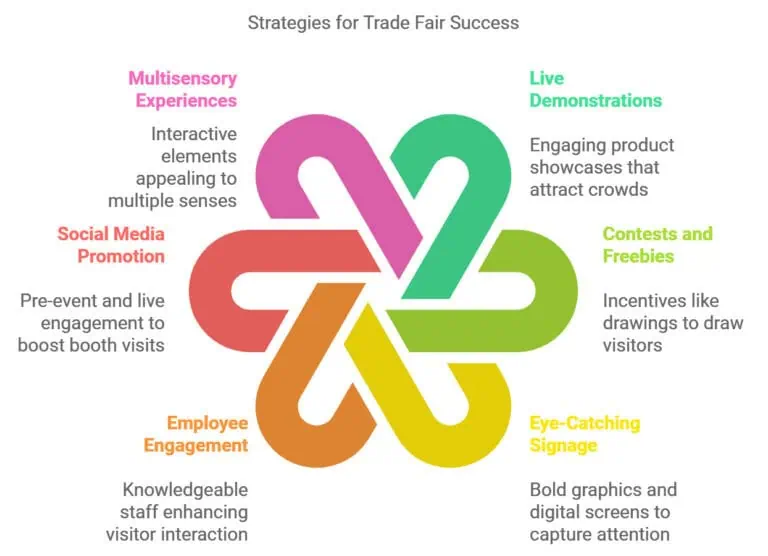
Designing an exhibition stand is all about making a strong first impression and connecting with people quickly. You need a clear message, simple layout, and eye catching visuals that reflect your brand. Keep the space open, welcoming, and easy to explore so visitors feel comfortable. When your design is clean and engaging, it naturally attracts attention and encourages people to stop and learn more.
Laying the Groundwork
Before you pick out flashy lights or paint colors, you need a plan. Building a booth without a plan is like baking a cake without a recipe. It usually ends up in a messy disaster!
Why Defining Your Goals Is the First Step
Ask yourself: What do you want to happen here? Do you want to sell 100 new gadgets? Do you want to make 50 new friends? Or maybe you just want people to learn your company name. Write your big goal on a piece of paper. Tape it to your wall. Every choice you make from now on must help you reach that big goal.
Who Is Your Audience, and What Do They Want?
Think about the people walking around the hall. Who are they? Are they serious business bosses in suits? Are they fun loving gamers? You need to know what makes them tick. If they love fun, bring games. If they want to learn, bring clear answers and comfy chairs. Give the people what they want, and they will love you for it.
How to Align Your Space with Your Marketing
Your booth should look like your brand. If your website is bright pink and super silly, your booth should be bright pink and super silly! When people see your space, they should instantly recognize you. Good exhibition stand design means telling the exact same story in person that you tell online.
Choosing the Right Stand
Not all booths are built the same. You have lots of choices, and picking the right one saves you time and money.
What Are the Different Types?
You can pick a simple “pop up” display. These are like giant posters that you can set up in five minutes. You can use a “shell scheme,” which is just a basic box the event gives you to decorate. Or, you can build a totally custom shape from scratch.
How to Select the Best Fit
Think about your budget and how often you travel. If you travel to a new city every weekend, you want something light and easy to carry. If you only go to one huge event a year, maybe you want to spend more to build a giant, custom castle.
Modular vs. Custom
Modular setups are like big building blocks. You can click them together in different shapes for different spaces. They are super smart if you want to save money over time. Custom builds are totally unique, like a tailored suit. They cost more, but nobody else will have anything like it.
Designing for Impact
Now comes the fun part! This is where you make things look beautiful.
The Role of Visual Hierarchy
Visual hierarchy is a fancy way of saying “put the most important stuff at the top.” Make your logo big and high up so people can see it from far away. Put your main message at eye level. Put the smaller details down low where people can read them when they step closer.
How to Use Graphics and Signage
Use big, clear pictures. Do not write a whole book on your walls. Nobody wants to read a giant wall of text while they are walking. Use short, snappy words. A good picture and a catchy five word sentence work a million times better than a long, boring paragraph.
The Power of Minimalism
Less is more. If you pack your space with 500 different products, people get confused and run away. Keep it clean. Keep it open. Leave some empty space so people have room to breathe and walk around.
Incorporating Multi Sensory Elements
Do not just think about eyes. Think about ears and noses, too! Play soft, happy music. Maybe bring a machine that smells like fresh coffee or warm cookies. When you use good smells and sounds, proper exhibition stand design turns into an experience people will never forget.
Engaging Visitors
You got them to look. Now, how do you get them to stay?
Create an Interactive Experience
Let people touch things. Let them push buttons. If you sell a cool tool, let them try it out. People learn best when they use their hands. When they play with your stuff, they fall in love with it.
The Role of Gamification
Everyone loves a game! Spin a prize wheel. Have a small putting green. Create a trivia quiz on an iPad. Give away small prizes like fun stickers or yummy candy. Games make people laugh, and laughing people are much easier to talk to.
How to Use Technology
Use big TV screens to show cool videos. If you are feeling brave, bring Virtual Reality (VR) goggles. Let people put on the goggles and step into a whole new world. Technology makes you look smart and modern.
What Makes Visitors Stay Longer at Your Stand?
People stay when they feel comfortable. Bring padded chairs. Offer free phone charging stations. Hand out cold bottles of water. If you treat them like a special guest in your home, they will happily hang out and listen to your story.
Practical Considerations
Big dreams are great, but we also have to think about the boring real world stuff.
Budgeting Tips for First Time Exhibitors
Write down every single thing you need to buy. Include the floor space, the walls, the lights, the travel tickets, and the snacks. Always save a little extra money in a “just in case” pile. Things always cost a tiny bit more than you think!
How to Optimize for Small Spaces
If your space is tiny, do not panic! Use bright lights to make it feel bigger. Do not bring huge tables that block the entrance. Keep the floor clear. You can do incredible exhibition stand design even if you only have a space the size of a closet.
Storage and Electricity
Where will you hide your extra boxes of flyers? Where will you hide your empty coffee cups? Make sure you build a hidden cabinet or bring a nice curtain to hide the mess. And do not forget to order power! You cannot run TV screens and cool lights without plugging them in.
Sustainability and Future Trends
We all want to keep our planet happy and green. Plus, being kind to the Earth is super trendy right now.
How to Make Your Space Eco Friendly
Stop printing thousands of paper flyers that people just throw in the trash. Use digital codes they can scan with their phones. Build your walls out of recycled cardboard or bamboo. Rent your furniture instead of buying cheap plastic stuff you will only use once.
The Rise of Smart Stands
The future is here! Some setups now use smart cameras to count exactly how many people walk by. Others use special tags to send info straight to a visitor’s phone when they walk close. Using smart tech makes your life easier and wows your guests.
Trends You Can’t Ignore
Keep an eye out for nature themes. Lots of people are bringing real plants and fake grass into their spaces to make them feel peaceful. Big, blocky, harsh shapes are out. Soft, glowing lights and cozy, friendly vibes are totally in.
Pre and Post Exhibition Strategies
The work does not start when the doors open, and it does not end when the doors close.
Pre Exhibition Checklist
Send emails to your favorite customers a month before the event. Tell them you will be there. Post fun sneak-peek pictures on social media. Make a checklist of everything you need to pack, right down to the sticky tape and the pens.
How to Train Your Team
Your people are the most important part of the whole puzzle. Tell them to smile. Tell them to stand up, not sit down playing on their phones. Teach them how to say a friendly “Hello, how is your day going?” instead of just aggressively pushing a product in someone’s face.
Post Exhibition Follow Up
When the show is over, your feet will hurt. You will be super tired. But you cannot sleep yet! Take all those email addresses you collected and send a happy message. Say, “It was so great to meet you!” Do this quickly before they forget who you are.
Measuring and Improving
How do you know if you did a good job? You have to check the score.
How to Track Your Success
Look back at that big goal you wrote on the wall in step one. Did you hit the number? Count how many people gave you their email. Count how many products you sold. Look at how much money you spent versus how much money you made.
Lessons Learned
Sit down with your team and ask, “What went wrong?” Did the TV break? Did you run out of mints on day one? Write these mistakes down in a notebook. Mistakes are just secret lessons that make you smarter for next time.
The Importance of Continuous Innovation
Never do the exact same thing twice. Always try to be a little bit better, a little bit brighter, and a little bit more fun. Good exhibition stand design is like a muscle the more you practice and try new things, the stronger and better it gets.
Conclusion
Creating an exhibition stand that grabs attention requires a perfect mix of creativity, strategy, and clarity. From bold visuals to smart layout choices, every element plays a role in attracting visitors. Focus on delivering a memorable experience rather than just displaying products. Keep your branding consistent and your message simple. When done right, your stand becomes a powerful marketing tool that drives engagement and results. Invest time in planning, and you’ll see the difference on the show floor.
FAQs
What makes an exhibition stand attractive?
An attractive exhibition stand combines strong visuals, clear branding, and an engaging layout. Elements like bold colors, eye catching graphics, and proper lighting help draw attention from a distance. However, attractiveness is not just about design it also includes how visitors interact with your space. A well organized stand with easy navigation and interactive elements makes people stay longer and engage more with your brand.
How important is branding in exhibition stand design?
Branding is extremely important because it helps visitors instantly recognize your business. Your logo, colors, fonts, and messaging should be consistent across the stand. Strong branding builds trust and makes your stand memorable even after the event ends. Without clear branding, even a visually appealing stand may fail to leave a lasting impression on visitors.
What size should an exhibition stand be?
The size of your exhibition stand depends on your budget, goals, and event space. A larger stand gives you more room for creativity and interaction, but even a small stand can be highly effective if designed smartly. The key is to use the available space efficiently by avoiding clutter and focusing on essential elements that highlight your brand and offerings.
How can I make my stand stand out from competitors?
To stand out, focus on uniqueness and visitor experience. Use creative design elements like interactive displays, digital screens, or live demonstrations. Offer something valuable, such as free samples or engaging activities. Most importantly, make sure your message is clear and easy to understand within seconds, so visitors instantly know what you offer.
What are common mistakes to avoid in exhibition stand design?
Common mistakes include overcrowding the space, using too much text, and ignoring lighting. Poor layout planning can make your stand look confusing and uninviting. Another mistake is not training staff to engage with visitors properly. A great design can fail if the human interaction is missing. Always aim for simplicity, clarity, and a welcoming environment.