

Maximize trade show success: materials in booth construction
TL;DR:
- Booth materials should be treated as strategic brand communication tools, not just construction elements.
- Investing in modular, durable, and eco-friendly materials enhances long-term flexibility and ROI.
- Prioritizing reusability and adaptability reduces costs and improves consistency across multiple trade shows.
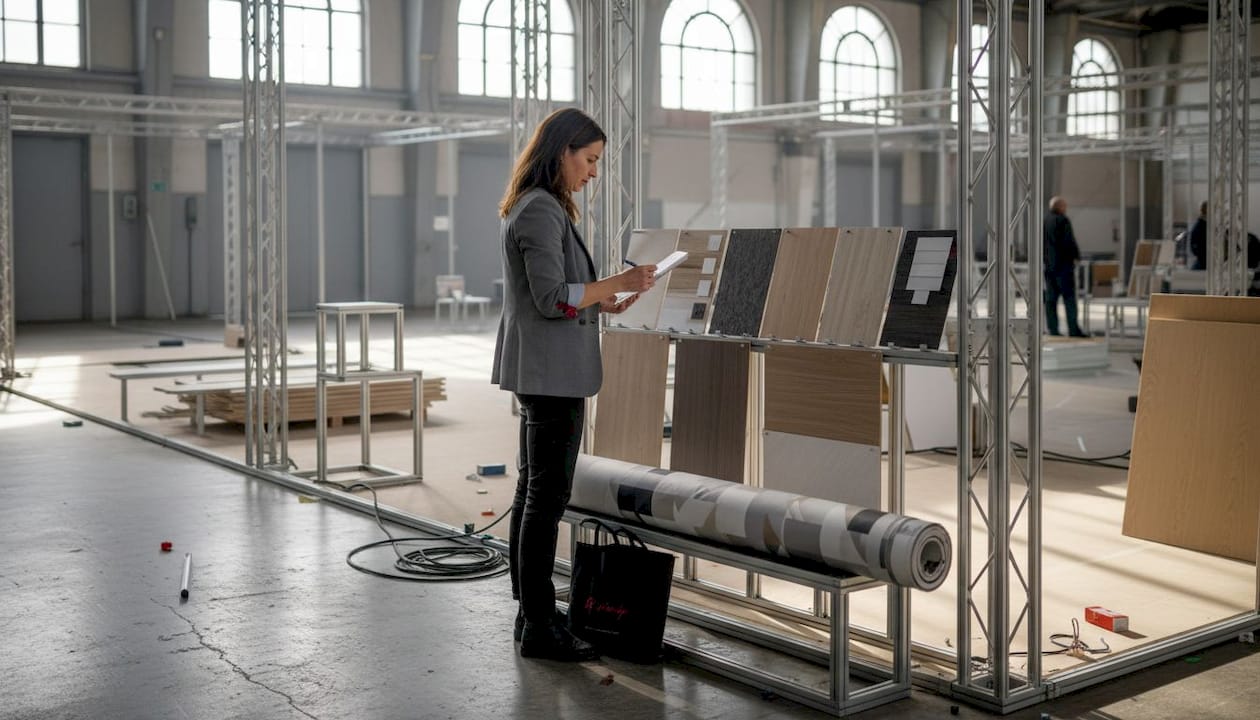
Most marketing managers treat booth materials as a line item rather than a strategic decision. That instinct is costly. Booth design consumes 28% of the total trade show budget, yet material selection is often finalized under deadline pressure with minimal analysis. The materials you choose function as your brand’s three-dimensional billboard on the show floor, shaping first impressions, structural performance, and the quality of every visitor interaction. This guide walks you through the foundational logic behind material choices, the full spectrum of available options, the sustainability trends reshaping European exhibitions, and a practical framework for aligning materials with your specific brand goals.
Table of Contents
- Why booth materials matter: Beyond the basics
- Types of booth materials and their unique strengths
- Sustainability and innovation: Trending materials in European booths
- Choosing the right materials for your brand goals
- The booth material mistake most brands still make
- Elevate your presence with tailored booth materials
- Frequently asked questions
Key Takeaways
| Point | Details |
|---|---|
| Materials influence ROI | Smart material selection improves booth impact, budget efficiency, and long-term returns. |
| Innovation drives engagement | Using advanced materials enhances visitor experiences and strengthens brand presence at trade shows. |
| Sustainable choices matter | Eco-friendly materials are now essential for European exhibition stands, supporting brand image and compliance. |
| Plan for reusability | Opting for modular or durable materials lets you adapt booths for future events and saves costs. |
Why booth materials matter: Beyond the basics
Materials are not merely the physical shell of your booth. They are the medium through which your brand communicates authority, creativity, and purpose before a single conversation takes place. When an attendee approaches your space, the texture of your surfaces, the weight of your counters, and the clarity of your displays all send signals about your company’s standards.
The structural implications are equally significant. Materials determine how your booth handles repeated assembly and disassembly, how it ships across European venues, and whether it can accommodate new branding elements from one show to the next. Choosing the wrong substrate can mean warped panels after two events, or a booth that exceeds venue weight limits and triggers unexpected fees.
From a budget perspective, the relationship between materials and ROI is direct. Experiential features account for up to 35% of design spend, reflecting their measurable value for engagement. Investing in materials that support tactile interaction, digital integration, or immersive lighting does not just improve aesthetics. It increases dwell time, which correlates with lead quality.
When choosing booth materials, consider these core trade-offs:
- Visual impact vs. logistics: High-gloss acrylic and tempered glass create premium impressions but add significant weight and fragility risk during transport.
- Innovation vs. cost: LED-embedded fabrics and smart textiles elevate experiential value but require higher upfront investment and specialist installation.
- Durability vs. flexibility: Solid wood structures feel substantial and premium but limit reconfiguration between events.
- Sustainability vs. availability: Certified eco-materials often require longer lead times and verified supplier relationships.
“The most effective booths treat materials as a strategic communication tool, not a construction necessity. Every surface is an opportunity to reinforce brand positioning.”
Pro Tip: Prioritize materials that support modular add-ons. A frame system that accepts interchangeable panels, graphics, and accessories lets you refresh your booth’s look for each show without rebuilding from scratch, protecting your initial investment over multiple event cycles.
Types of booth materials and their unique strengths
Understanding your options is the prerequisite for making confident decisions. Booth materials fall into several distinct categories, each with specific performance characteristics.
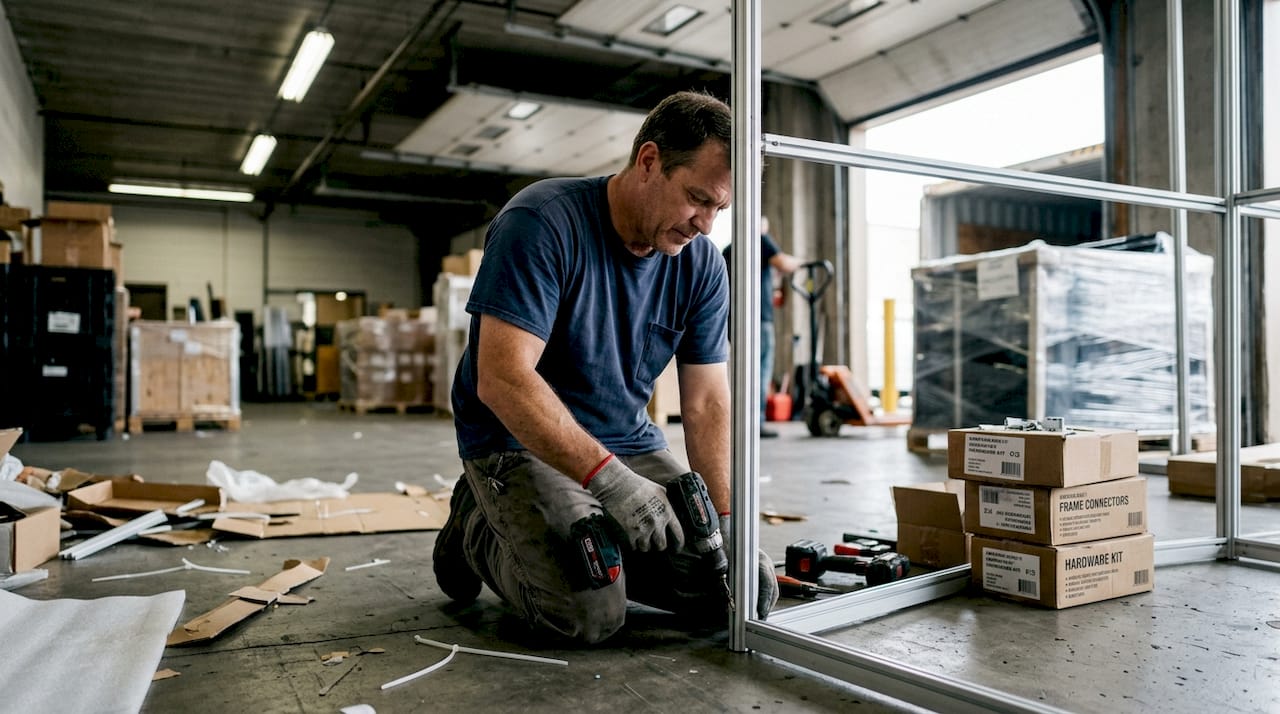
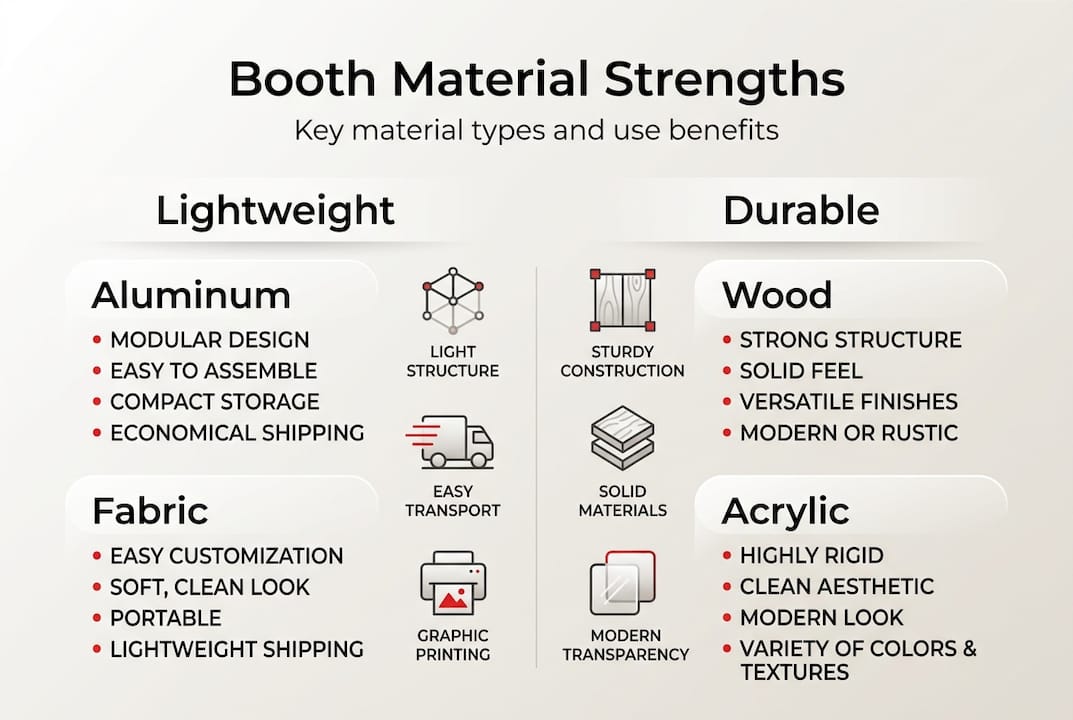
Aluminum is the industry workhorse. It is lightweight, strong, and highly compatible with modular systems. Aluminum extrusion frames are easy to assemble without specialist tools, making them ideal for teams managing their own setup. The visual result is clean and professional, though it can read as generic without thoughtful graphic integration.
Wood and MDF (medium-density fiberboard) deliver warmth and customization. Routed surfaces, branded textures, and premium finishes are all achievable. The trade-off is weight and limited reusability, since painted or laminated wood panels often cannot be repurposed without refinishing.
Fabric and tension systems have evolved significantly. Modern fabric graphics are printed at high resolution, stretch over lightweight frames, and pack into small cases. They are among the most cost-efficient options for large-format branding. Modular booth materials based on fabric systems are particularly popular for companies exhibiting at multiple shows annually.
Glass and acrylic create transparency and a high-end feel. These materials work well for product displays and meeting areas where visibility matters. Cost and fragility are the primary limitations.
Composites and recycled materials represent the fastest-growing category, particularly in Europe. Panels made from recycled plastics or agricultural waste fibers offer competitive structural performance with significantly lower environmental impact. Explore eco-friendly booth options for a deeper look at this category.
Modular construction saves up to 24% compared to fully custom builds, making it the preferred approach for budget-conscious exhibitors who still want design flexibility.
| Material | Best for | Weight | Reusability | Relative cost |
|---|---|---|---|---|
| Aluminum | All booth sizes | Low | High | Medium |
| Wood/MDF | Large, custom booths | High | Low | Medium-High |
| Fabric/Tension | Small to medium | Very low | High | Low-Medium |
| Glass/Acrylic | Product displays | High | Medium | High |
| Recycled composites | Eco-focused brands | Medium | Medium-High | Medium |
- Small booths: Fabric tension systems and aluminum frames offer the best value.
- Medium booths: Hybrid aluminum and composite panels balance impact with logistics.
- Large booths: Custom wood elements combined with modular aluminum cores maximize flexibility.
Sustainability and innovation: Trending materials in European booths
Europe’s exhibition industry is operating under increasing regulatory and reputational pressure to reduce environmental impact. The EU’s Green Deal framework, combined with growing attendee and client expectations around corporate responsibility, has moved sustainability from a marketing preference to a practical requirement for many brands.
Brands are shifting budgets toward sustainable and experiential materials as a deliberate strategy for improved ROI and brand differentiation. This is not a temporary trend. It reflects a structural shift in how European procurement teams and marketing directors evaluate exhibition investments.
The most widely adopted sustainable materials currently include:
- FSC-certified wood: Sourced from responsibly managed forests, offering the aesthetic warmth of timber with verified environmental credentials.
- Recycled plastic panels: Made from post-consumer waste, these panels are increasingly competitive in terms of finish quality and structural performance.
- Biodegradable composite panels: Derived from agricultural fibers such as flax or hemp, these materials are lightweight and compostable at end of life.
- Reusable fabric graphics: Printed on recyclable substrates with water-based inks, these reduce waste across multiple show cycles.
On the innovation side, digital wall panels and smart textiles are redefining what a booth surface can do. Digital walls allow real-time content updates, eliminating the cost of reprinting graphics for each event. Smart textiles with embedded LED elements create dynamic lighting effects that respond to visitor proximity, turning your booth into a dynamic communication platform.
Consult the eco-friendly booth design guide for detailed specifications, and review sustainable booth ideas for practical applications across different booth formats.
| Material type | Carbon impact | Average cost index | Reuse cycles |
|---|---|---|---|
| Standard MDF | High | 1.0 | 1 to 2 |
| Aluminum modular | Medium | 1.2 | 10 or more |
| Recycled composite | Low | 1.1 | 4 to 6 |
| Biodegradable panel | Very low | 1.3 | 1 to 3 |
| Digital wall panel | Low (operational) | 2.0 | 8 or more |
Pro Tip: Always request material certifications and lifecycle assessments from your suppliers before committing. A supplier who cannot provide documentation for sustainability claims represents both a reputational risk and a potential compliance issue under European procurement standards.
Choosing the right materials for your brand goals
With a clear picture of available materials and market trends, the practical question becomes: how do you select the right combination for your specific objectives? The following framework provides a structured approach.
1. Define your brand positioning first. A technology company launching a flagship product needs materials that signal innovation, such as digital surfaces and precision aluminum. A heritage manufacturer may prioritize the warmth and solidity of wood composites. Materials must align with the story your brand tells.
2. Map your logistics reality. Consider how many shows you attend annually, the distances between venues, and your setup team’s capabilities. Lightweight, modular materials reduce shipping costs and assembly time significantly, which matters when you are exhibiting across multiple European countries.
3. Set a realistic budget with a multi-year view. Higher spending on booth materials correlates with improved experiential engagement and brand recall. However, the smarter calculation is cost-per-use. A modular system that costs 40% more upfront but serves ten shows outperforms a cheaper custom build that degrades after two.
4. Evaluate sustainability requirements. If your clients or procurement policies require environmental reporting, your material choices must support that documentation. Select suppliers who provide lifecycle data.
5. Plan for adaptability. Choose a core material system that accepts graphic updates, new product display configurations, and technology integrations without requiring full reconstruction.
Quick checklist by brand type:
- High-traffic brands: Prioritize durable surfaces, easy-clean materials, and robust structural components.
- Tech-driven brands: Integrate digital wall panels and cable management into the material spec from the start.
- Eco-focused brands: Specify certified sustainable materials and ensure your supplier can provide documentation.
Mistakes to avoid include overinvesting in a single trend material without testing its practical performance, and underestimating the hidden costs of complex materials such as specialist installation fees and fragile component replacement. Review creative booth ideas and inspiring booth designs to see how leading brands balance ambition with practicality.
The booth material mistake most brands still make
Most guides focus on what materials to choose. Few address the underlying decision-making error that leads brands to the wrong choice repeatedly.
The mistake is evaluating materials in isolation from the full show cycle. Brands select materials based on how a booth will look on opening morning, not on how it will perform after six events, three countries, and two rebrands. The result is a booth that looks exceptional in the first show and mediocre by the third, with escalating repair and replacement costs eating into the original budget savings.
Durable, modular, and innovative materials do not just save money. They give you the operational flexibility to adapt your booth to each show’s specific audience, floor plan, and brand message. That adaptability is where real ROI accumulates, not in the single-event visual impact.
“The brands that consistently outperform on the show floor are not those with the biggest budgets. They are the ones who treat material selection as a multi-year investment strategy.”
The uncomfortable truth is that the best booth designs are built on material systems chosen for long-term performance, not short-term impressions. Always ask your provider directly: how many times can this material be reused, and what does reconfiguration cost?
Pro Tip: Request a reusability and scalability assessment from your booth provider before signing off on any material specification. This single conversation can save significant budget across your next three to five show cycles.
Elevate your presence with tailored booth materials
The right materials transform your booth from a physical structure into a strategic launchpad for brand engagement. Every insight in this guide points toward the same conclusion: material decisions made with strategic intent consistently outperform those driven by habit or short-term cost pressure.
At Adam Expo Stand, we specialize in helping marketing and brand managers across Europe select, design, and build booth solutions that balance visual impact, logistical efficiency, and sustainability. Whether you need modular systems for multi-show flexibility, innovative digital surfaces, or certified eco-friendly materials, our team brings the expertise to match your brand goals with the right material specification. Connect with us to explore your options and plan your next exhibition with confidence.
Frequently asked questions
What are the most cost-effective materials for trade show booths?
Modular booth systems using aluminum and fabric are typically the most cost-effective, with modular construction saving up to 24% compared to fully custom builds, making them the preferred choice for brands exhibiting across multiple events.
How does sustainability affect material choices for booths in Europe?
European regulations and growing brand accountability are driving exhibitors toward certified materials such as recycled plastics and FSC-certified wood, with sustainability now a core priority in exhibition procurement decisions across the continent.
What materials make the biggest impact on visitor engagement?
Experiential materials including digital wall panels and LED-embedded fabrics drive the strongest engagement results, as experiential elements account for up to 35% of design spend precisely because of their proven impact on visitor dwell time and brand recall.
Can materials be reused for multiple trade shows?
Yes. Modular aluminum frames, tension fabric systems, and high-quality composite panels are all designed for repeated use, and modular systems support adaptability across different show configurations, maximizing your long-term return on the initial investment.

