How to Qualify a Visitor at a Trade Show
Knowing how to qualify a visitor at a trade show is the skill that separates high-performing exhibitors from those who collect hundreds of business cards and convert almost none. Qualification isn’t gatekeeping—it’s a respectful, efficient process of establishing whether a visitor has the authority, need, and timeline that match your sales criteria. The key to how to qualify a visitor at a trade show is asking open-ended questions early in the conversation: “What brings you to the show today?” and “What are you hoping to solve in the next six months?” reveal decision-making power and urgency in a single exchange. Train your team on this process before the show opens, and build your lead capture tool around qualification fields rather than just contact details.
How to attract visitors at trade shows in 2026
You’ve invested thousands in your trade show booth, yet visitor numbers disappoint year after year. Most exhibitors face this frustration despite premium booth locations and flashy displays. This guide reveals proven strategies to boost footfall by 50% and turn passive attendees into qualified leads through audience targeting, strategic design, interactive engagement, and smart staffing in 2026.
Table of Contents
- Prerequisites: What You Need Before You Start
- Step 1: Understand Your Audience And Pre-Event Promotion
- Step 2: Optimize Stand Location And Design
- Step 3: Engage Visitors With Interactive Experiences And Staffing
- Step 4: Common Mistakes And Troubleshooting
- Step 5: Expected Results And Measuring Success
- Elevate Your Trade Show Success With Adam Expo Stand
Key takeaways
| Point | Details |
|---|---|
| Target and promote early | Begin booth promotion 6-8 weeks before the event using email, social media, and industry publications to maximize awareness and visitor intent. |
| Optimize location and design | Book booths near entrances or main aisles and use bold colors, clear messaging, and open layouts to welcome visitors naturally. |
| Engage with interactive experiences | Run contests, demos, and quizzes while training staff to ask open-ended questions and personalize interactions for quality lead generation. |
| Avoid common pitfalls | Eliminate clutter, overcrowding, confusing messaging, and giveaway-only tactics that deter meaningful visitor engagement. |
| Measure and refine | Track visitor numbers, lead quality, engagement duration, and ROI to benchmark performance and improve future trade show strategies. |
Prerequisites: what you need before you start
Before implementing visitor attraction strategies, you need a solid foundation. Success at trade shows starts weeks before the event opens.
Start with thorough market research on your target attendees. Identify their demographics, job roles, pain points, and interests relevant to your product or service. This intelligence shapes everything from booth messaging to staff training.
Next, study the trade show venue layout carefully. Understanding visitor flow patterns helps you select booth locations in high traffic zones near entrances, main aisles, or food courts. Request floor plans early and mark competitor locations.
Set clear marketing objectives for the event. Define specific visitor number goals, lead quality targets, and desired conversion rates. Write these down and share them with your entire team.
Allocate budget across three critical areas:
- Exhibition stand design and construction costs
- Pre-event promotional campaigns and materials
- Staffing, training, and on-site engagement tools
Develop basic knowledge of current visitor behavior trends. In 2026, attendees expect interactive experiences, personalized conversations, and instant value. They skip booths that look generic or salesy.
Pro Tip: Create a simple checklist covering research, budget, venue analysis, and team briefings. Review it monthly during your 6-8 week preparation window to stay on track.
| Preparation Element | Timeline | Estimated Cost Range |
|---|---|---|
| Market research | 8 weeks before | $500-$2,000 |
| Venue layout study | 6 weeks before | $0-$500 |
| Stand design and build | 10-12 weeks before | $5,000-$50,000 |
| Pre-event promotion | 6-8 weeks before | $1,000-$10,000 |
| Staff training | 2-4 weeks before | $500-$3,000 |
This foundation ensures you’re ready to execute proven engagement strategies that convert attendee curiosity into qualified leads.
Step 1: understand your audience and pre-event promotion
Attracting visitors starts long before the trade show doors open. Your pre-event marketing directly impacts booth traffic.
Research attendee profiles using event registration data, industry reports, and past exhibitor insights. Identify their specific pain points, business challenges, and what solutions they’re actively seeking. Match your product benefits to these needs.
Build anticipation through multiple promotional channels. Pre-event marketing boosts visitor numbers by 25-30% when executed strategically.
- Send personalized email invitations to existing customers and prospects 6-8 weeks before the event
- Post regular social media updates showcasing booth previews, product teasers, and special event offers
- Advertise in trade publications that your target audience reads regularly
- Partner with industry influencers or media outlets to extend your reach beyond direct networks
- Create landing pages with exclusive content or early registration incentives for booth visitors
Tailor all messaging to emphasize visitor benefits, not product features. Instead of “See our new software,” say “Discover how to cut reporting time by 40%.” Make it about solving their problems.
Collaborate with show organizers to get featured in attendee communications. Many events offer promotional packages that highlight exhibitors in pre-show emails and mobile apps.
Pro Tip: Offer appointment scheduling through your pre-event campaigns. Visitors who book time slots in advance are 3x more likely to become qualified leads than walk-ins.
Integrate your event branding ideas across all channels for consistent recognition. Use the same colors, messaging, and visual identity from emails to booth graphics.
Track which promotional channels drive the most booth inquiries. Double down on top performers and adjust underperforming tactics. This data shapes your engagement strategies for current and future events.
Step 2: optimize stand location and design
Where your booth sits and how it looks determines whether attendees notice you. Location and design work together to maximize visibility.
Booths near entrances or main aisles attract up to 50% more visitors than corner or back-wall positions. Book early to secure premium spots. Target areas near:
- Main entrance and registration zones where attendee energy is highest
- Food courts and lounges where people naturally gather
- Complementary exhibitors whose audiences overlap with yours
- High traffic pathways between major pavilions
Once you secure location, focus on design that pulls visitors in from a distance. Use bold brand colors, creative lighting, and oversized graphics that communicate your value proposition in under 3 seconds.
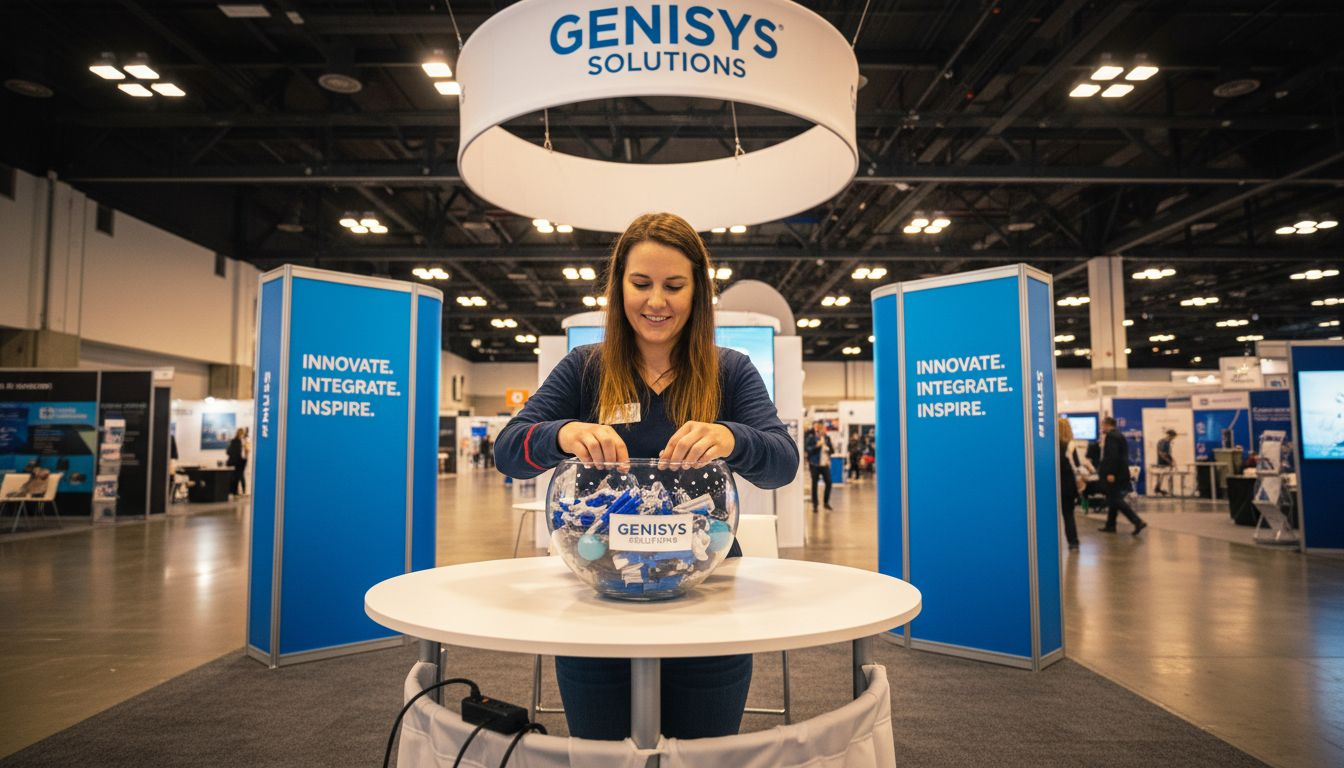
Create an open layout without physical barriers. Avoid tables or counters that create separation between staff and visitors. Exhibition stand design should invite people to walk in naturally.
Keep messaging simple and benefit-focused. Display headlines like “Reduce Costs 35%” or “Solve [Specific Problem]” rather than company slogans. Visitors decide whether to engage based on immediate relevance.
Pro Tip: Use vertical space strategically with hanging signs or tall displays. Attendees spot these from across the hall, creating visual anchors that guide foot traffic to your booth.
| Attraction Method | Visitor Volume Impact | Lead Quality | Setup Cost |
|---|---|---|---|
| Giveaway-based booths | High initial traffic | Low to medium | $500-$2,000 |
| Interactive engagement booths | Medium to high sustained traffic | High | $2,000-$10,000 |
| Product demo-focused booths | Medium traffic | Very high | $1,500-$8,000 |
The comparison shows interactive engagement delivers superior lead quality despite similar visitor volume to giveaway tactics. Invest in experiences that filter for genuinely interested prospects.
For exhibitors with limited space, check small booth design ideas that maximize impact in compact footprints. Smart layouts make 10×10 spaces feel twice as large.
Step 3: engage visitors with interactive experiences and staffing
Attracting visitors to your booth is just the start. Converting attention into meaningful conversations requires deliberate engagement tactics.
Interactive contests and staff training increase lead generation by 300% compared to passive giveaway approaches. Design activities that require participation and information exchange.
- Run gamified contests where visitors compete for prizes by answering product-related questions
- Offer interactive product demos that let attendees experience solutions hands-on
- Create digital quizzes that assess visitor needs and recommend personalized solutions
- Set up virtual reality experiences that immerse visitors in your product environment
- Host mini-workshops or expert consultations scheduled throughout the day
These interactive exhibition stands generate qualified leads because participants self-identify their interest level through engagement.
Staffing makes or breaks visitor experience. Assign clear roles to optimize interactions:
- Greeters welcome visitors and qualify interest levels quickly
- Product specialists handle detailed technical questions and demos
- Lead capture assistants collect contact information and schedule follow-ups
- Managers oversee flow and handle VIP visitors or complex negotiations
Train every team member on core engagement strategies before the event. Practice open-ended questions like “What challenges are you facing with [specific process]?” instead of closed yes/no questions.
Avoid overcrowding your booth with too many staff members. The ideal ratio is one staff member per 50-75 square feet of booth space. Excess staff intimidates visitors and creates awkward dynamics.
Pro Tip: Implement a staff rotation schedule with breaks every 90 minutes. Tired, unfocused staff kill visitor engagement faster than poor booth design.
Best practices for staff engagement include:
- Smile and make eye contact with passing attendees
- Ask permission before launching into product pitches
- Listen actively and take notes on visitor pain points
- Personalize conversations based on visitor’s industry and role
- Respect visitors’ time and offer quick value
- Follow up promises immediately, don’t make empty commitments
Remember that booth functionality extends beyond aesthetics. Include charging stations, comfortable seating areas, and refreshments that give visitors reasons to linger and engage.
Step 4: common mistakes and troubleshooting
Even well-planned booths fail when exhibitors make predictable errors. Recognize these pitfalls and fix them fast.
Cluttered, overcrowded booths repel visitors instantly. Confusing messaging and overcrowding significantly reduce engagement by creating overwhelming environments. Limit booth staff to 3-5 people maximum for standard spaces.
Relying solely on giveaways attracts the wrong crowd. Attendees who grab free pens or stress balls rarely convert to customers. Add qualification steps to any promotional items. Require badge scans or quick surveys before handing out prizes.
Poor messaging clarity kills booth performance. If visitors can’t understand your value proposition in 5 seconds, they keep walking. Test your signage with colleagues unfamiliar with your product. If they struggle to explain what you do, redesign it.
Physical barriers block engagement. Tables, counters, or roped-off areas create psychological distance between staff and visitors. Remove obstacles that prevent natural conversation flow.
Troubleshooting tips when visitor numbers disappoint:
- Move staff to booth perimeters to engage passing traffic actively
- Simplify messaging to one clear benefit statement
- Add movement or video content to catch attention from a distance
- Increase interactive elements that create curiosity
- Check if competitors nearby are drawing your target audience
Storage solutions matter more than most exhibitors realize. Visible clutter from boxes, coats, or excess materials makes booths look unprofessional. Use stand storage solutions that hide supplies while keeping essentials accessible.
If lead quality stays low despite high traffic, your qualification process needs work. Train staff to ask filtering questions early in conversations. Identify decision makers versus researchers.
Step 5: expected results and measuring success
Applying these strategies delivers measurable improvements. Set realistic benchmarks and track performance rigorously.
Optimal strategies yield up to 50% more footfall and 300% more leads compared to baseline trade show performance. Your actual results depend on industry, event size, and execution quality.
Track visitor numbers throughout the event. Compare your booth traffic to neighboring exhibitors and industry averages. Premium locations near entrances typically generate 200-400 visitors over a 3-day show.
Monitor lead volume and quality separately. Count total conversations, badge scans, and follow-up appointments scheduled. Then classify leads by readiness: hot prospects ready to buy, warm leads needing nurturing, and cold contacts for long-term cultivation.
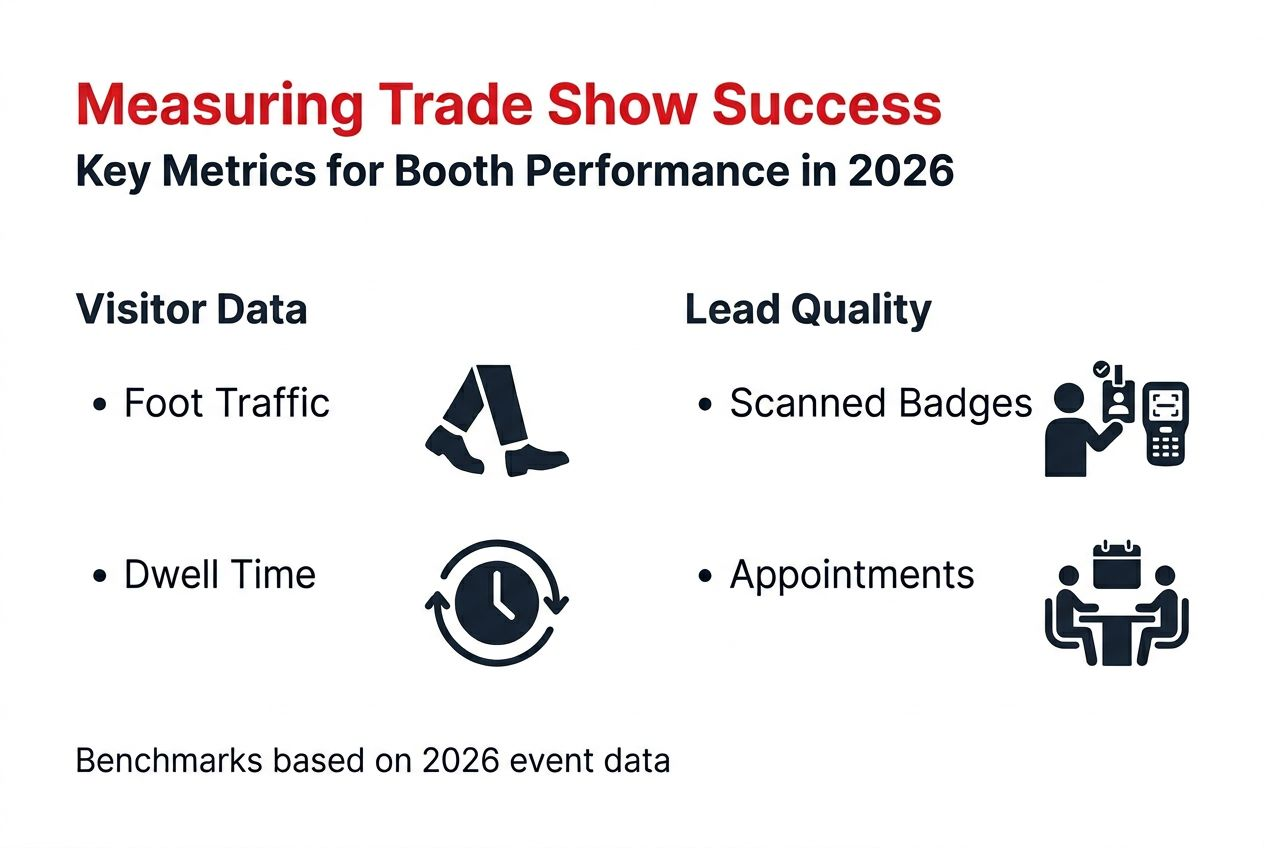
Assess ROI improvements linked to specific tactics. Calculate cost per lead by dividing total event investment by qualified leads generated. Top performers achieve $50-150 cost per lead at major industry events.
Use visitor feedback to refine future strategies. Survey booth visitors about their experience, what attracted them, and what would improve engagement. This qualitative data reveals gaps quantitative metrics miss.
Pro Tip: Track average engagement duration per visitor. Meaningful conversations last 5-10 minutes. If most interactions end under 2 minutes, your staff needs better qualification and engagement training.
| Performance Metric | Industry Benchmark | Target with Optimal Strategy | Measurement Method |
|---|---|---|---|
| Total booth visitors | 150-250 per day | 225-375 per day | Badge scans, manual counts |
| Qualified lead conversion | 15-25% | 30-45% | CRM tracking, follow-up data |
| Cost per lead | $150-300 | $75-150 | Total cost ÷ qualified leads |
| Engagement duration | 3-5 minutes | 6-10 minutes | Time tracking, staff observation |
| Post-show meetings booked | 10-20% of leads | 25-40% of leads | Calendar scheduling data |
Compare your results against these benchmarks. Significant underperformance indicates issues with location, design, messaging, or staff engagement that need immediate correction.
Document everything for post-event analysis. Review what worked, what flopped, and why. This institutional knowledge compounds over multiple events, turning your team into trade show success experts.
Elevate your trade show success with Adam Expo Stand
You now have the blueprint for attracting and engaging trade show visitors in 2026. Turning these strategies into reality requires expertise in exhibition stand design, interactive technology, and visitor psychology.
Adam Expo Stand specializes in creating exhibition stands engineered for maximum visitor attraction and engagement. Our team designs custom booths that combine optimal layouts, interactive elements, and strategic messaging to pull attendees from across the show floor. We handle everything from 3D design to on-site installation, ensuring your booth performs exactly as planned. Partner with us to transform your trade show presence, multiply your qualified leads, and maximize ROI at every event.
FAQ
How far in advance should I start promoting my trade show booth?
Start promoting your booth 6-8 weeks before the event for optimal awareness and visitor intent. Use multiple channels including email campaigns, social media posts, industry publications, and event organizer partnerships to maximize reach. Earlier promotion builds anticipation and allows prospects to plan their show schedule around visiting your booth.
What are the most effective interactive experiences to attract visitors?
Contests, product quizzes, live demonstrations, virtual reality experiences, and gamification drive the highest engagement and lead quality. Choose tactics that align naturally with your brand and product to maximize relevance. Interactive elements that require participation generate 3x more qualified leads than passive giveaway-only approaches.
How can staff be best prepared to engage visitors effectively?
Train staff on open-ended questioning techniques, active listening skills, and quick visitor needs assessment before the event. Assign clear roles like greeter, product specialist, and lead capture assistant to streamline interactions. Practice conversations that focus on visitor pain points rather than product features, and implement rotation schedules to maintain energy throughout long show days.
What common mistakes should I avoid to improve visitor attraction?
Avoid overcrowding your booth with too many staff members, creating cluttered displays, relying solely on giveaways, using confusing messaging, or placing physical barriers between staff and visitors. Create an open, welcoming environment with clear value propositions visible from 20 feet away. Ensure every element of your booth answers the visitor’s question: what’s in it for me?