

Exhibition stand design and build at IFEMA Madrid
Adam Expo Stand designs, produces and installs custom and modular exhibition stands in Madrid. Start with your event, floor plan, objectives and budget; we can then discuss the layout, production scope and delivery schedule. Explore our completed IFEMA projects below and request an itemised proposal for your stand.
Completed IFEMA Madrid projects
SGS Dental at Expodental
The SGS Dental stand connected product displays, live demonstrations and private meetings within an open layout. Glass-inspired elements, multimedia screens and LED lighting supported the visual identity. See the SGS Dental brief, solution and photographs.
Alphacan at VETECO
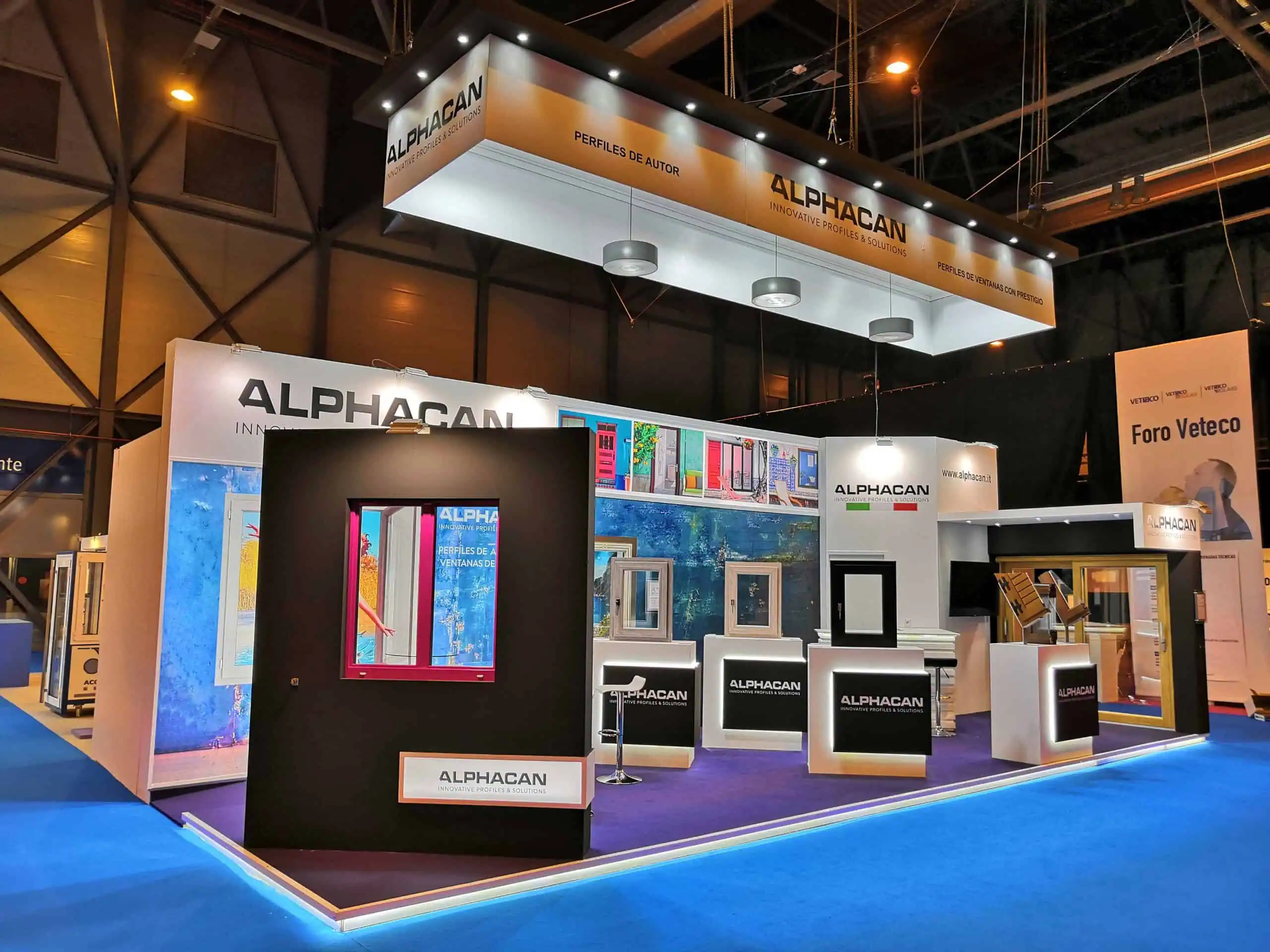
The Alphacan project used architectural display frames and reinforced demonstration areas for window and door systems. The published case study also describes reuse across event editions. Explore the Alphacan project.
These examples show design choices and delivery scope. They do not establish a guaranteed increase in visitor numbers or leads. For more examples, explore our case studies.
Choose a stand around what your team needs to do
A good brief explains what happens on the stand: product demonstrations, meetings, displays, lead capture and storage. The right solution depends on the space, event rules and how often you will exhibit.
| Stand option | When to consider it | What to compare |
|---|---|---|
| Custom stand | A distinctive layout, specialist product display or several activity zones | Production time, finishes, engineering requirements and reusable components |
| Modular stand | A programme of exhibitions with changing floor sizes | Reconfiguration, graphics, storage, transport and cost across the full programme |
| Rental or shell-scheme upgrade | A single event or an existing organiser-provided structure | What the venue package includes and what must be supplied separately |
Explore custom exhibition stand design, modular systems and rental solutions.
What a Madrid stand proposal should cover
Our design and build service can bring together concept design, production, logistics, installation, show support and dismantling. Your written proposal should identify the agreed deliverables, responsibilities and exclusions before you commit.
- Design: layout, branding, display requirements, meeting areas and agreed visualisations.
- Production: structure, finishes, graphics, lighting, furniture and any specified AV.
- Venue coordination: drawings, permits and service-order responsibilities appropriate to the event and design.
- Delivery: transport, installation, handover and the agreed support arrangements.
- After the show: dismantling, disposal, storage or reuse, as included in the proposal.
“Turnkey” is useful only when the scope is clear. Ask who orders and pays for venue electricity, rigging, internet, cleaning, machinery handling and other third-party services. Read more about our turnkey solutions.
Planning an IFEMA Madrid stand
Use the current exhibitor manual for your event and the conditions attached to your allocated plot. Build-up and dismantling windows, permitted heights, rigging, structural approvals, fire requirements and service deadlines can differ by event and location.
Before approving a design, confirm:
- Your hall, stand number, dimensions, open sides and neighbouring plots.
- Height limits and approval requirements for the proposed structure.
- Product dimensions, weight, power and any demonstration safety requirements.
- Venue service-order deadlines and authorised providers.
- Access, delivery, installation and dismantling arrangements.
Check IFEMA Madrid’s official website and your organiser’s exhibitor documentation. Our IFEMA Madrid exhibitor guide helps you identify questions to resolve; the current event manual and written organiser approvals take precedence.
From your brief to opening day
1. Brief and feasibility
Send your floor plan, event dates, brand guidelines, product requirements and budget range. Include how many people will work on the stand, which meetings need privacy and what must be stored out of sight.
2. Concept and design approval
We discuss a layout and 3D design with you. Confirm the delivery date for the initial concept and any detailed renderings when the brief is agreed; design complexity, revisions and production deadlines affect the schedule. Approve the layout, materials and written scope before production begins.
3. Production and venue coordination
Production follows the approved design. Confirm artwork deadlines, technical submissions, logistics and who is responsible for each venue service. Keep any organiser approvals with the project documentation.
4. Installation, handover and dismantling
Use a handover checklist covering the agreed finishes, lighting, AV, furniture, storage and demonstration areas. Confirm show-support contacts and the post-event plan for dismantling and any components intended for reuse.
How much should you budget for a stand in Madrid?
A stand budget depends on floor area, structure, finishes, graphics, technology, logistics and service scope. An organiser’s floor-space or shell-scheme charge is separate from the contractor’s build price unless the proposal expressly includes it. Request a project-specific quotation rather than treating a per-square-metre estimate as a fixed price.
Use our stand cost calculator for initial planning, then compare quotations using the same floor plan and list of requirements.
Compare the complete cost, not just the build total
- Design, revisions, production and graphics.
- Lighting, AV, furniture and product-display equipment.
- Transport, handling, installation and dismantling.
- Venue space, electricity, rigging, internet, water and other ordered services.
- Show support, cleaning, storage and future reinstallation.
- VAT treatment, payment schedule, change charges and exclusions.
For a multi-show programme, compare the total cost across all events, including storage, replacement graphics, repairs and transport. A reusable system saves money only if those costs and future layouts make sense for your programme.
Planning for reuse and lower material waste
Discuss reuse at the concept stage: standard components, replaceable graphics and designs that adapt to your next floor plan. Ask which materials will be retained, where they will be stored and what the next installation will require.
Material certifications and environmental claims should refer to the actual products and project scope. Digital screens allow digital content to change; printed fabric graphics still need replacement when the artwork changes. Compare material reuse, transport and storage as part of the whole project. Explore our sustainable stand planning guide.
Frequently asked questions
How early should I contact a stand builder?
Contact us while your event and floor-space plans are being agreed. Larger or more complex builds need time for design, approvals and production. Send the event date with your enquiry so we can confirm feasibility and a project schedule.
Can you work with a small stand?
Share your dimensions and objectives. A small stand needs clear priorities: a demonstration, a display or a conversation area may deserve more space than decorative elements. We can discuss the appropriate custom, modular or rental approach.
Can you coordinate technical approvals?
We can discuss the technical documentation and venue coordination needed for the proposed build. The quotation should identify what is included, who submits each document and any third-party engineering or venue charges.
Can a stand have an upper floor?
Feasibility depends on the event rules, plot, design and structural approvals. Confirm those requirements before commissioning a double-decker concept; general hall height alone does not establish permission.
Can components be stored and reused?
Discuss the next event’s layout and the storage, inspection, repair, transport and reinstallation scope before the first build. Ask for those costs separately in a multi-show proposal.
Do you work outside Madrid?
Adam Expo Stand also serves exhibitions in Spain and across Europe. Send the venue and event details with your brief so we can discuss delivery and logistics for your programme.
Send a brief we can quote accurately
Include the exhibition name, venue, dates, floor plan, stand dimensions, open sides, budget range, brand assets and your display, demonstration, meeting and storage needs. Tell us whether this is a one-off event or part of a wider programme.
Request a proposal for your Madrid stand
Madrid exhibition resources
What exhibitors say about us
Client reviews of Adam Expo Stand projects:
Content reviewed and updated: .